

Women behind the kilim loom: From the Bauhaus to the Bosporus
Berlin exhibition combines art and weaving tradition - and celebrates kilim artwork by Bauhaus master Gunta Stölzl from October 19, 2023 as part of a creative weavers' project
Save the Date: 19.10.2023, 7 p.m.
Vernissage of the exhibition “Women Behind the Weave: Bauhaus to Bosporus” Special Guests: Matthew Bourne and Dorothy Bourne by Christopher Farr
Location: Kastanienallee 55, 10119 Berlin
Duration of the exhibition: 19.10. – 16.11.2023 (finissage)
Opening hours: Thursday to Saturday, 12:00 h – 18:00 h

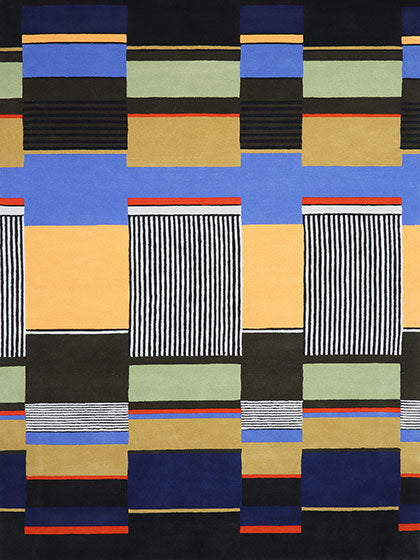
Photo: "1923" Kelim carpet based on original design by Gunta Stöltz
- As part of the reopening of the new Wild Heart Free Soul Kilim showroom in Berlin Mitte, owner Beyza Nur Özler is presenting the exhibition “Women Behind The Weave: From Bauhaus to the Bosporus” for the first time in Germany.
- The exhibition exclusively shows the kilim carpet "1923", which was produced by the carpet producer Christopher Farr based on an original design by the Bauhaus master Gunta Stölzl and comes from the private collection of the Stölzl family. Christopher Farr also makes knotted carpets based on original designs by other Bauhaus artists, including Anni Albers and Josef Albers. These are produced in collaboration with the Josef and Anni Albers Foundation. A selection of these "Edition Rugs" will be part of the exhibition at Wild Heart Free Soul.
- Gunta Stölz's original design "1923" served as a template for the Turkish workshop Kirkit and was woven by hand using the traditional Anatolian kilim weaving technique. The weaver and textile designer Gunta Stölzl was the first master at the Bauhaus art school and is considered an innovator of the art of hand weaving.
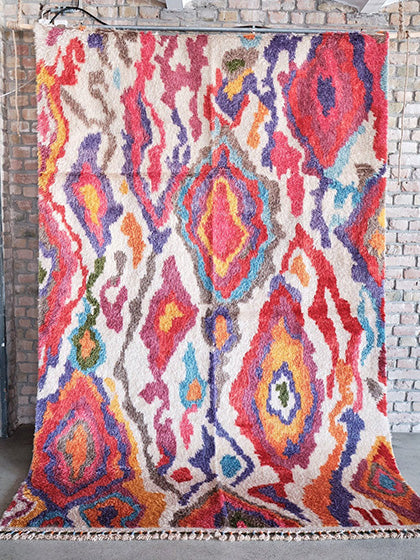
- The Women Behind the Weave exhibition also features fifteen woven kilim rugs, each one custom-made by Kirkit weavers. The one-of-a-kind kilim art pieces will be offered for sale exclusively through Wild Heart Free Soul, with proceeds going to a local charity of Kirkit's choosing. .
- Kirkit sets new standards for the welfare of weavers, fights for a sustainable industry standard and thus secures the future of traditional weaving in Turkey.
- “Women Behind the Weave” wants to honor these different groups of women: the kilim weavers from Anatolia and the women from the Bauhaus weaving department.
Berlin exhibition: “Women behind the kilim loom: From the Bauhaus to the Bosporus”
Hand-woven, sustainable, tradition-conscious: On the occasion of the launch of a newly manufactured kilim carpet by Bauhaus master Gunta Stölzl (1897-1983), the renowned carpet producer Christopher Farr has teamed up with the Kirkit workshop. The Christopher Farr company has already produced carpets by famous Bauhaus artists such as Anni Albers and Josef Albers.
Stölzl gained fame not only as the first female Bauhaus master, but also for her unconventional approach. She shifted the focus from painterly work to more industrial designs, introduced radical ideas from the world of modern art into weaving, and initiated experiments with materials and methods that brought weaving into the modern age. led .
For the first time in Germany, a new design by Bauhaus master Gunta Stölzl will be on display, woven by weavers from the Kirkit Kelim workshop.
As part of the presentation of this Bauhaus kilim, the creative weaving project "Women Behind the Weave: Bauhaus to Bosphorus" will be presented: fifteen woven works of art created by individual weavers from the Kirkit workshop. They produced flatweaves according to their own ideas and not according to a predetermined pattern. The only specifications were to work on 1 m² and to use leftover yarn.
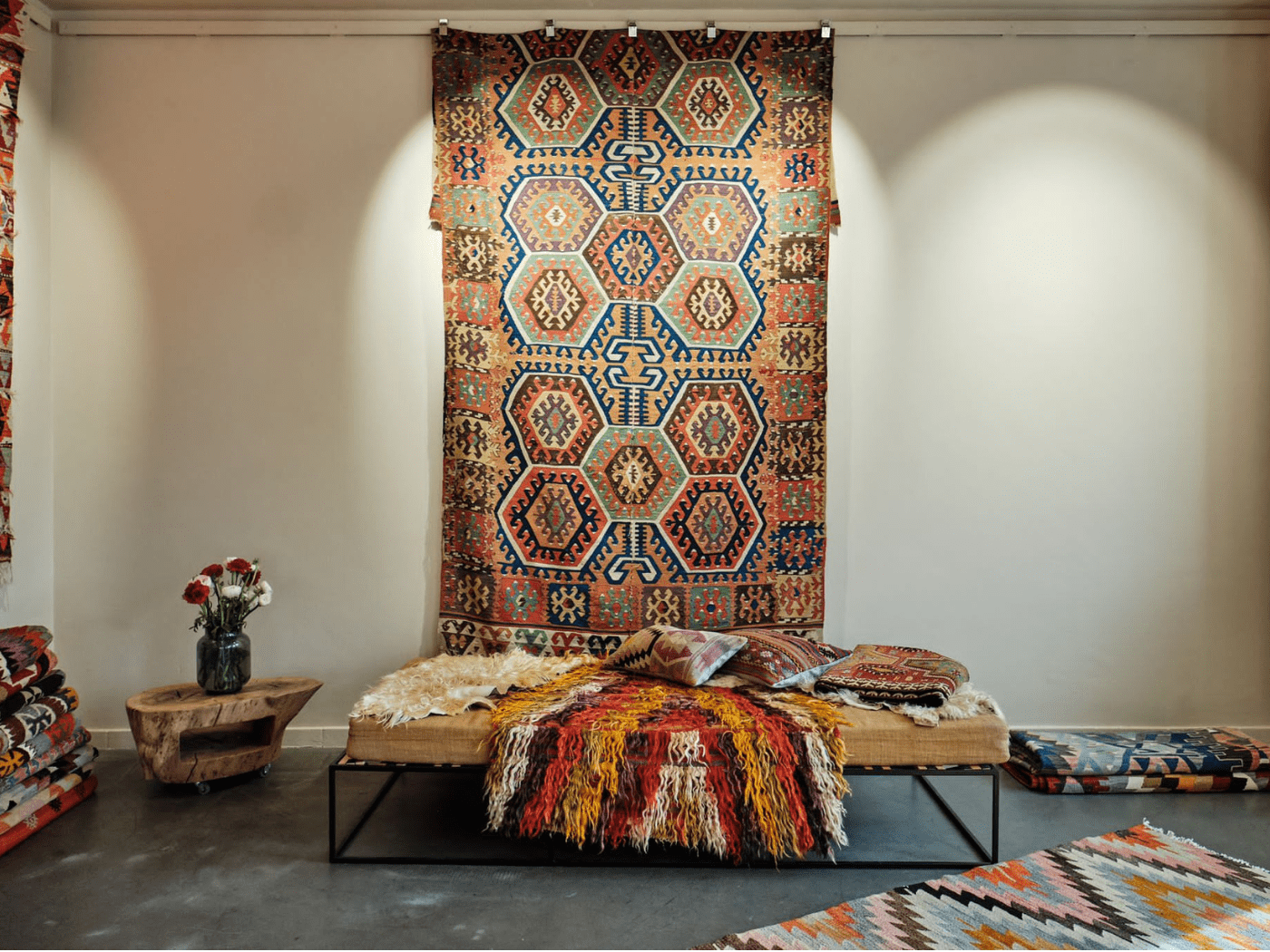
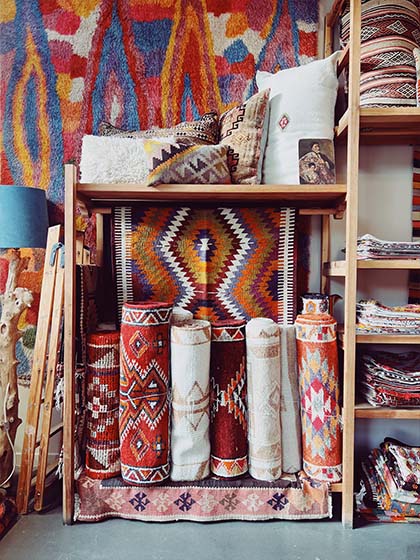
The exhibition is taking place in the new Wild Heart Free Soul showroom in Berlin Mitte, whose owner Beyza Özler has been trading in antique and semi-antique kilims and carpets from Anatolia for 10 years. Wild Heart Free Soul founder Beyza Özler: "The exhibition does not only focus on the artistic-traditional weaving craft and the legendary Bauhaus design. The "Women Behind the Weave" project wants to pay tribute to these two very different groups of women."
Beyza Özler of Wild Heart Free Soul, Matthew Bourne of Christopher Farr and Ahmet Diler of Kirkit share a common vision: to preserve the centuries-old craft of carpet weaving and to revolutionize carpet production in terms of social responsibility, fair remuneration and recognition of the weavers. Kirkit employs twenty-three weavers with regular working hours, including a lunch break with home-cooked food. All employees have a pension and access to medical care.
"Women Behind the Weave" also aims to give the Kirkit weavers a public platform on which they can promote their sustainable business approach, their unique model workshop and their values (fair trade, sustainability, respect for the weavers). The common goal: to give the knotters and weavers the respect they deserve and to ensure that the millennia-old knowledge of traditional carpet making and their cultural heritage is preserved in the future.
Matthew Bourne, co-founder of Christopher Farr: "We are delighted that the women of the Kirkit workshop have produced these weavings as a tribute to the unparalleled tradition of kilim weaving in Anatolia, which has continued for thousands of years. It is important that this tradition continues and the best way to ensure this is to enhance the value of this craft and the women who make it. One cannot imagine a world in which the French would allow their wine industry to disappear. Weaving is of equal cultural importance to Turkey and the other countries of Asia Minor."

Excursion Kelim carpets: artistic treasures from the Orient and Occident
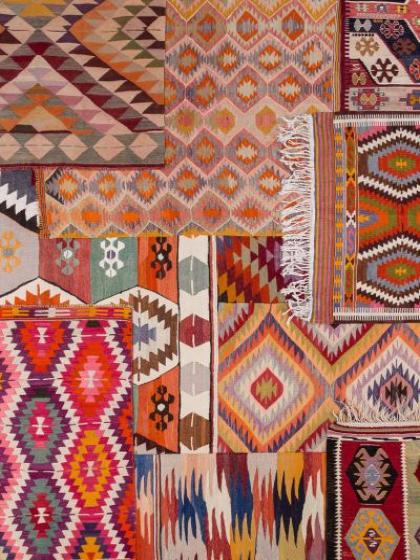
Kilim rugs are more than just floor coverings; they are cultural treasures that tell stories and celebrate craftsmanship. One of the most fascinating types of rugs is the kilim rug, which has been made in different parts of the world for centuries. Kilims were made by nomadic tribes in the Middle East and Central Asia as practical and decorative items. They were used to decorate tents, cover the floor, and as saddle blankets for horses.
The oldest known kilims date back to the 4th century BC and were found in Egypt. These early kilims were often decorated with geometric patterns and were made from natural materials such as wool, cotton and goat hair.
Over the centuries, the art of kilim making spread across various regions, including Iran, Turkey, the Caucasus, India and North Africa. Each region developed its own styles, patterns and color palette, reflecting cultural diversity and artisan mastery.
Making kilim rugs is a complex process that requires skill, patience and dedication. Unlike traditionally woven rugs, kilims are not made on a loom, but on a horizontal frame that allows weavers to stretch the warp threads and insert the weft threads by hand. This process requires precise handwork and is time-consuming.
The choice of materials is also of great importance. High-quality wool and cotton are often used to produce long-lasting and durable kilims. The dyeing of the yarns is often done naturally with plant dyes, which gives the kilims their characteristic, earthy colors.
Another notable feature of kilim rugs is their flat, woven structure. Unlike the thicker knotted rugs, kilims have a thinner texture and are therefore lighter. This makes them ideal for use in warmer climates.
Kilim rugs are not only decorative items, but also have symbolic meaning. In many cultures, they are associated with luck, protection and spiritual values. In Turkey, for example, kilims are often given as gifts on special occasions such as weddings and are believed to bring luck and prosperity to the couple
In addition, kilim rugs often tell stories from the lives of the weavers. Each kilim can be unique and contain different patterns and symbols that reflect the creativity and stories of the people who made it.

Photo: Kirkit weavers in Usak, Türkiye
Respect for the weavers, fair trade and sustainability: the Kilim workshop Kirkit
The company is founded and managed by Ahmet Diler, the third generation of a weaving family. Kirkit Rugs is an Istanbul-based company with other hand-knotted and specialized kilim workshops in Turkey, producing high-quality rugs that are exported all over the world. The company regularly participates in international fairs, including Domotex, Hannover, Maison et Objet, Paris and in the USA. Kirkit works with international designers and has experience in weaving custom-made items in special colors and sizes.

Photo: The weavers on the Bauhaus stairs, 1927
Excursion by Bauhaus master Gunta Stölzl
Gunta Stölzl stands out as a pioneer in the field of textile art. Her innovative approach to textiles not only changed the way we perceive fabrics, but also challenged traditional gender roles in art and design.
In 1919, Gunta Stölzl's life took a decisive turn when she joined the Bauhaus in Weimar. Founded by Walter Gropius, the Bauhaus sought to break down the traditional boundaries between craftsmanship and fine art and promote a holistic approach to design. At the heart of the Bauhaus philosophy was the idea that art and design should be integrated into everyday life, and Stölzl embraced this ethos.
Gunta Stölzl initially enrolled as a student, but her talent and commitment soon earned her a position as a junior master weaver. In this role, she began experimenting with innovative weaving techniques and materials and pushing the boundaries of textile design. Her work attracted attention not only for its aesthetics, but also for its functional qualities. Stölzl's creations were not mere decorations, but practical everyday objects that could enrich people's lives.
Gunta Stölzl's presence at the Bauhaus was also an important step in challenging traditional gender roles in art and design. At a time when women in this field were often relegated to the decorative arts, she broke these restrictions by becoming the first female master at the Bauhaus. Her appointment to this position reflected the institution's commitment to equality and the recognition of talent.
One of Stölzl's most iconic contributions to the world of textile art was her innovative weaving technique known as "hanging double weave." This process involves weaving two layers of fabric simultaneously, creating a three-dimensional effect that adds depth and texture to her designs. Her experiments with new materials, colors and patterns expanded the possibilities of textile art and made her a leading figure in the Bauhaus textile revolution.
Gunta Stölzl's life and work remain a testament to the transformative power of creativity, innovation and determination. Her pioneering spirit at the Bauhaus not only revolutionized textile design, but also paved the way for future generations of artists and designers to break free from traditional constraints. Gunta Stölzl's legacy reminds us that art knows no gender and that the boundaries of artistic expression are limited only by one's own imagination.

Wild Heart Free Soul Showroom
Kastanienallee 55, 10119 Berlin Mitte
Phone: +49 151 506 55 294
Mail: selam@wildheartfreesoul.com
Web: www.wildheartfreesoul.com
Facebook: www.facebook.com/wildheartfreesoul
Instagram: www.instagram.com/wildheartfreesoulberlin