
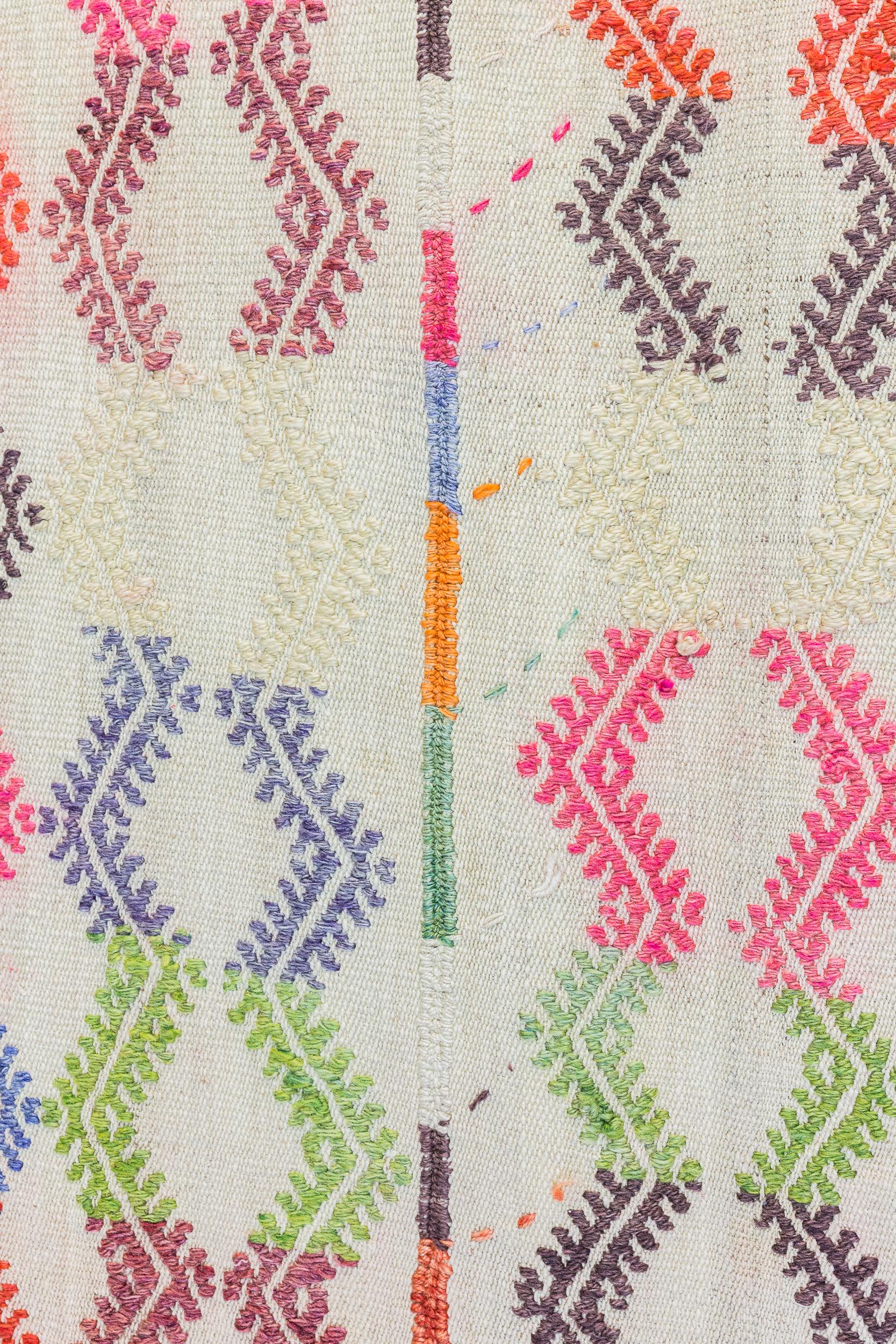
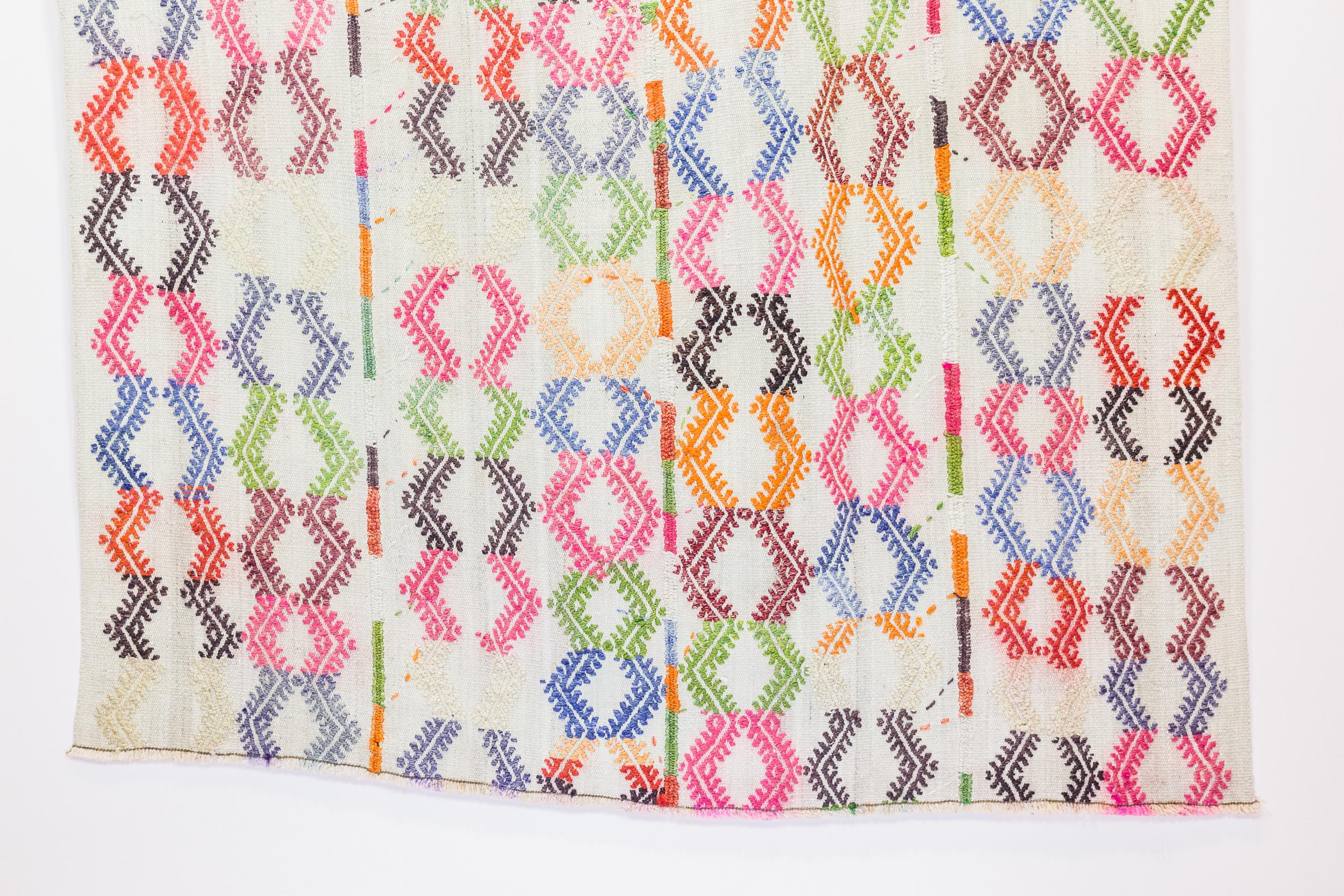
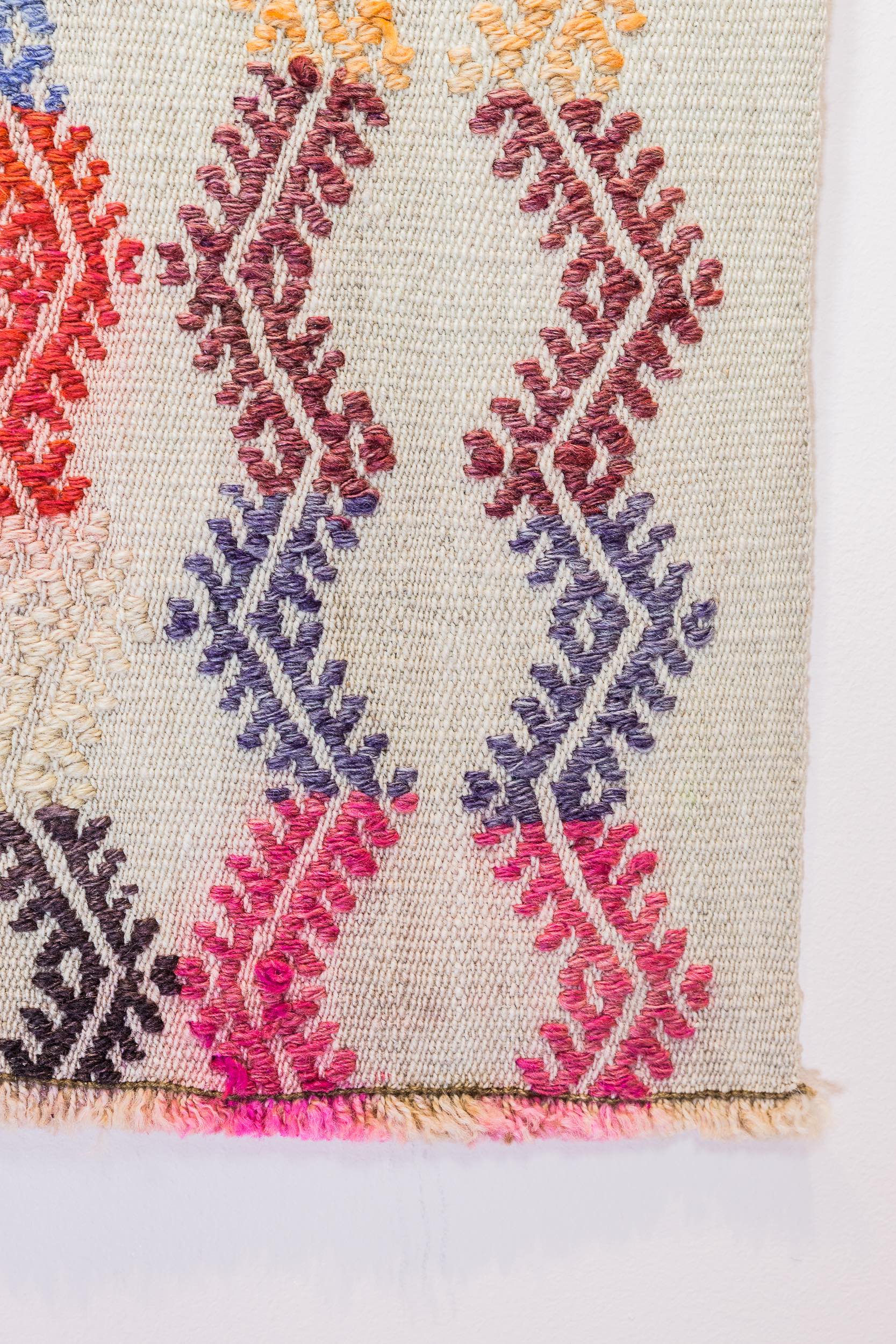
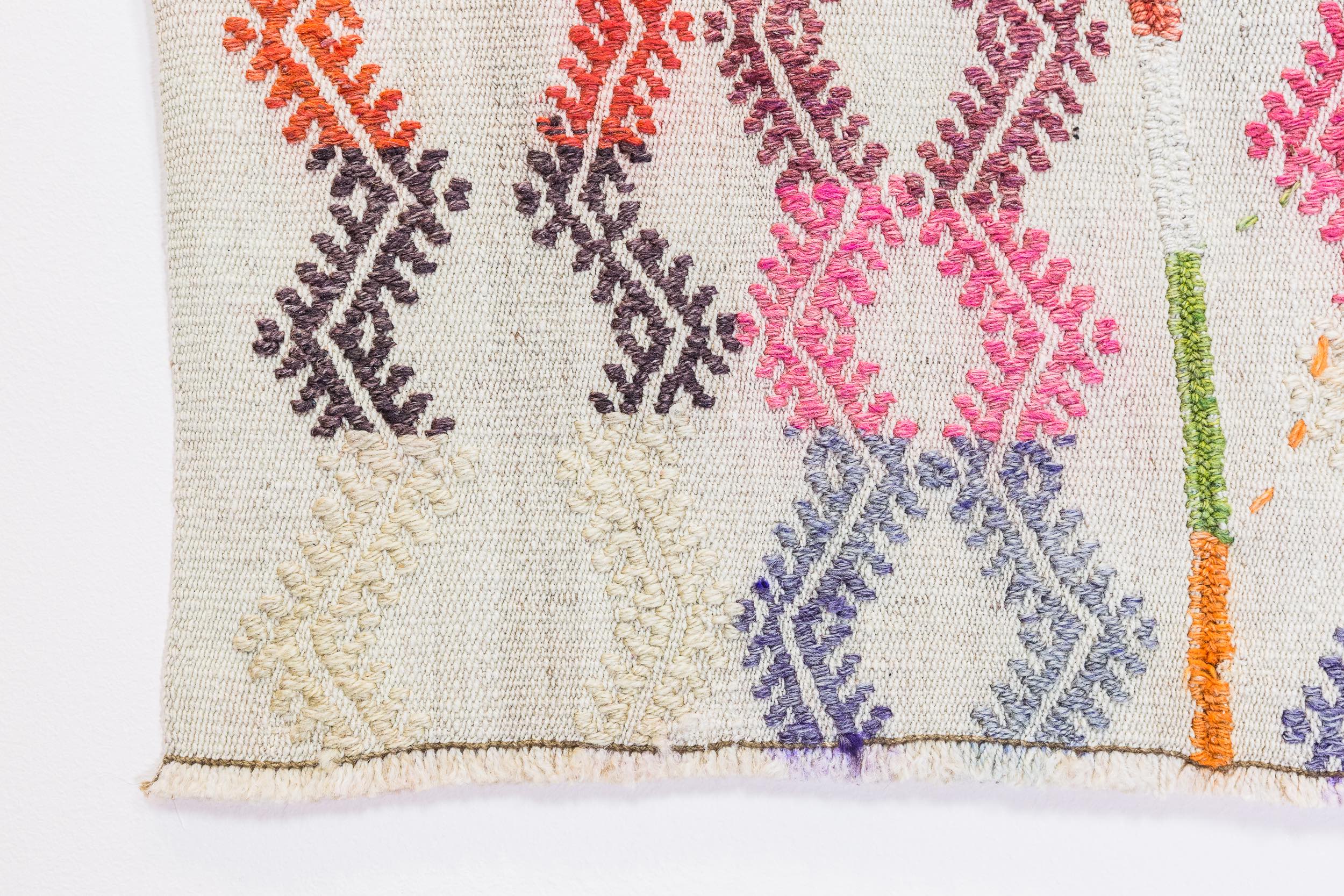


Vintage Kilim, Adana 220x140 cm
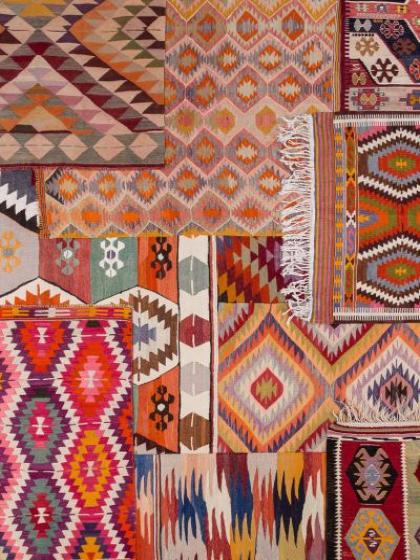
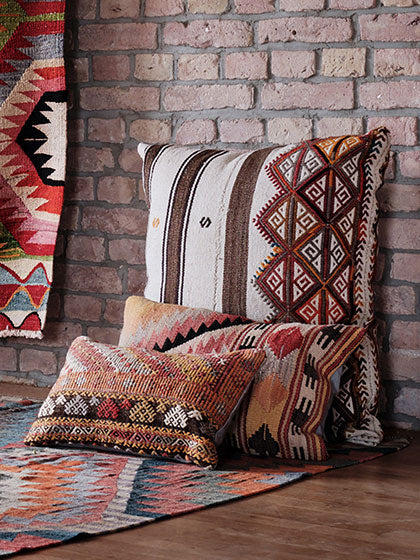
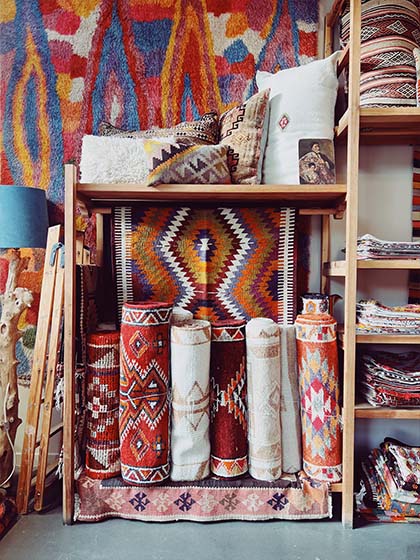
Original vintage kilims change the atmosphere in a room immediately. They add cosiness to a modern loft with concrete floors as well as they fuse perfectly with a boho-styled apartment. They turn your bathroom into something very special and they shouldn't be missed on your terrace or balcony. You can even use them as a wall hanging as a woven piece of art!
Kilims are no ordinary textiles. They carry culture, tradition, artistry & handicraft. Original Anatolian kilims were hand-woven by nomad or village women many decades ago.
Every kilim symbol, every pattern has its own meaning. Archaic, universal and existing since thousands of years. Old kilims are like woven poems. Telling stories of the tribal life, of desires, wishes and the hopes of wild women. The powerful combination of colors and ancient symbols create a form of energy that is protective and calming, uplifting and rejuvenating.
We select and curate our vintage kilims with lots of care for authenticity and quality and source them in different regions of Anatolia.
All our kilims are cleaned and restored in Turkey professionally and in a natural way.
Origin: Acipayam, West-Anatolia
Material: 100% hand spun sheep wool
Size: 220 x 140 cm
Vintage Kilim, Adana 220x140 cm
Wild Heart Free Soul
Kastanienallee 55
10119 Berlin
Germany
Choose options
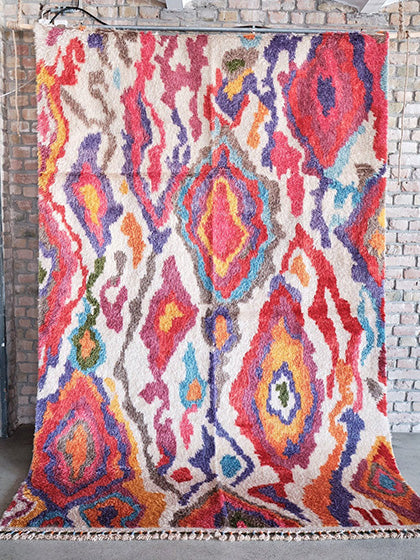
Anatolian flat-woven kilim rug made of sheep's wool. Woven from recycled wool of old kilims.
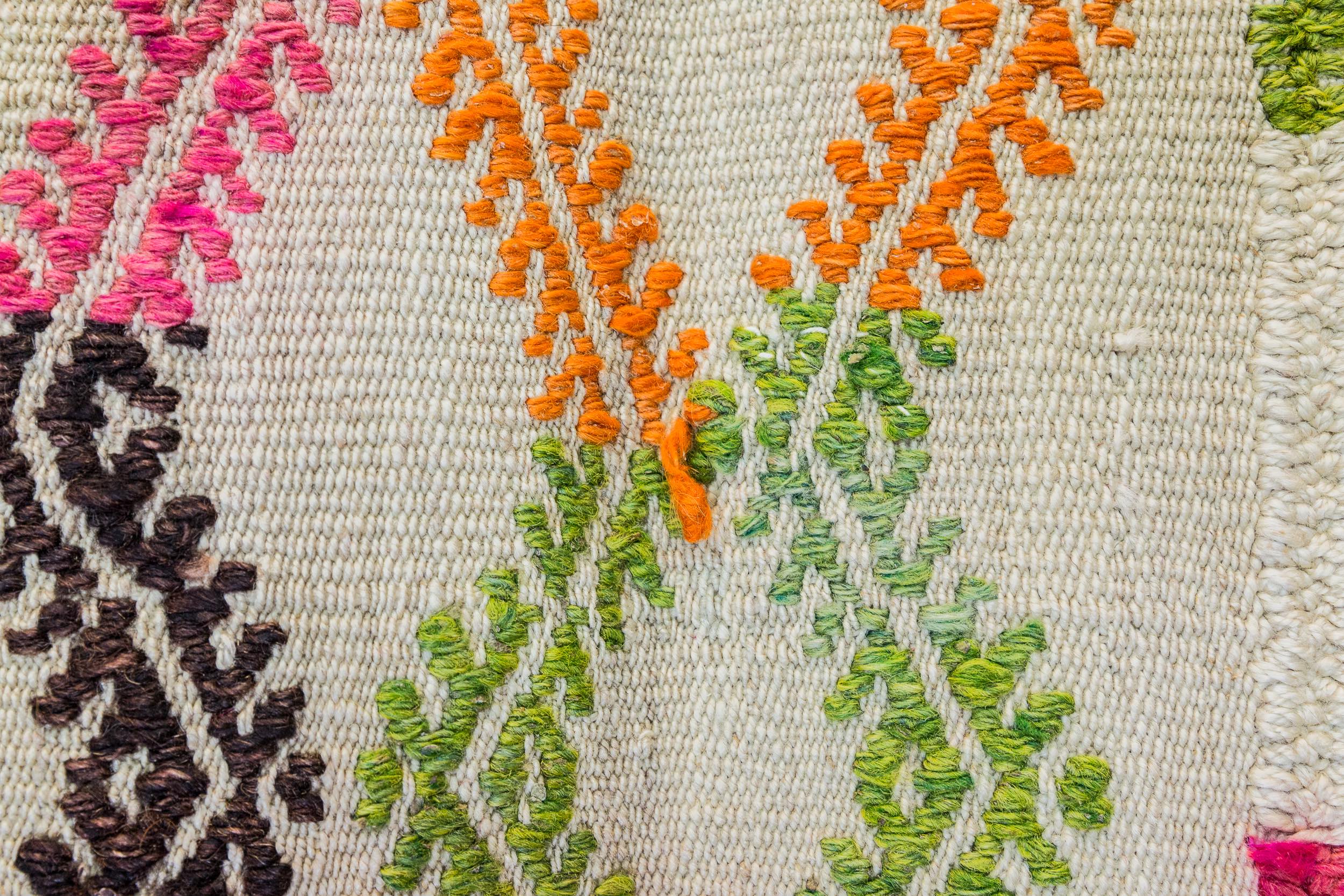
Natural irregularities are characteristic of our handmade vintage rugs.
- Material: 100% hand-spun sheep's wool, highest quality
- Workmanship: Flat-woven by hand on a traditional, horizontal wooden loom
- Age: New
- Origin: Manisa, Anatolia
- Size: 300x192cm, Height: 3mm
Anatolian kilims are far more than mere textile objects – they are woven memories, personal messages, and expressions of lived culture. For generations, women from nomadic tribes and villages wove their wishes, hopes, and stories into the fabric – freely, intuitively, and full of symbolic power.
This kilim too was woven in an Anatolian home – from the wool of their own sheep, shorn, washed, combed, and hand-spun. The yarns were often dyed with natural pigments from madder, weld, walnut, or indigo – but from the 1950s onwards, synthetic dyes increasingly found their way into the villages. The world became faster, more colorful – not every kilim remained purely plant-dyed. Many pieces from the 1960s and 1970s bear the traces of a cultural transition in their hues: between old and new, craft and modernity.
Weaving was a ritual act – accompanied by songs, stories, silence. Often, several women sat together at the loom: mother, grandmother, sister, neighbor. Every knot, every line, every symbol carried meaning – protection, fertility, connection, strength. Symbols such as the eye (Göz), the cosmic mother (Elibelinde), or the scorpion became carriers of deep messages.
They were used, loved, passed down – and some of them slumbered for a long time in chests until they one day came to light again.
Today, we clean and restore these pieces with the utmost respect: washed with olive soap, dried in the Antalya sun, repaired in our Istanbul studio.
Some pieces are with us for only a few months, others accompany us for years – because we rush nothing. Every kilim is restored with time, care, and respect. Some wait for the right restorer, for the summer months to bathe in the sunlight – for their silent transformation back into a living work of art.
A kilim from Wild Heart Free Soul is not a product.
It is a legacy. A woven wish.
And perhaps a companion for your home of tomorrow.
Anatolian kilims are far more than mere textile objects – they are woven memories, personal messages, and expressions of lived culture. For generations, women from nomadic tribes and villages wove their wishes, hopes, and stories into the fabric – freely, intuitively, and full of symbolic power.
This kilim too was woven in an Anatolian home – from the wool of their own sheep, shorn, washed, combed, and hand-spun. The yarns were often dyed with natural pigments from madder, weld, walnut, or indigo – but from the 1950s onwards, synthetic dyes increasingly found their way into the villages. The world became faster, more colorful – not every kilim remained purely plant-dyed. Many pieces from the 1960s and 1970s bear the traces of a cultural transition in their hues: between old and new, craft and modernity.
Weaving was a ritual act – accompanied by songs, stories, silence. Often, several women sat together at the loom: mother, grandmother, sister, neighbor. Every knot, every line, every symbol carried meaning – protection, fertility, connection, strength. Symbols such as the eye (Göz), the cosmic mother (Elibelinde), or the scorpion became carriers of deep messages.
They were used, loved, passed down – and some of them slumbered for a long time in chests until they one day came to light again.
Today, we clean and restore these pieces with the utmost respect: washed with olive soap, dried in the Antalya sun, repaired in our Istanbul studio.
Some pieces are with us for only a few months, others accompany us for years – because we rush nothing. Every kilim is restored with time, care, and respect. Some wait for the right restorer, for the summer months to bathe in the sunlight – for their silent transformation back into a living work of art.
A kilim from Wild Heart Free Soul is not a product.
It is a legacy. A woven wish.
And perhaps a companion for your home of tomorrow.
Material
Sheep's wool is a natural and very high-quality material. All our carpets are woven from hand-spun sheep's wool yarn, which consists of long fibers and has a very high lanolin (wool grease) content. This makes them
