

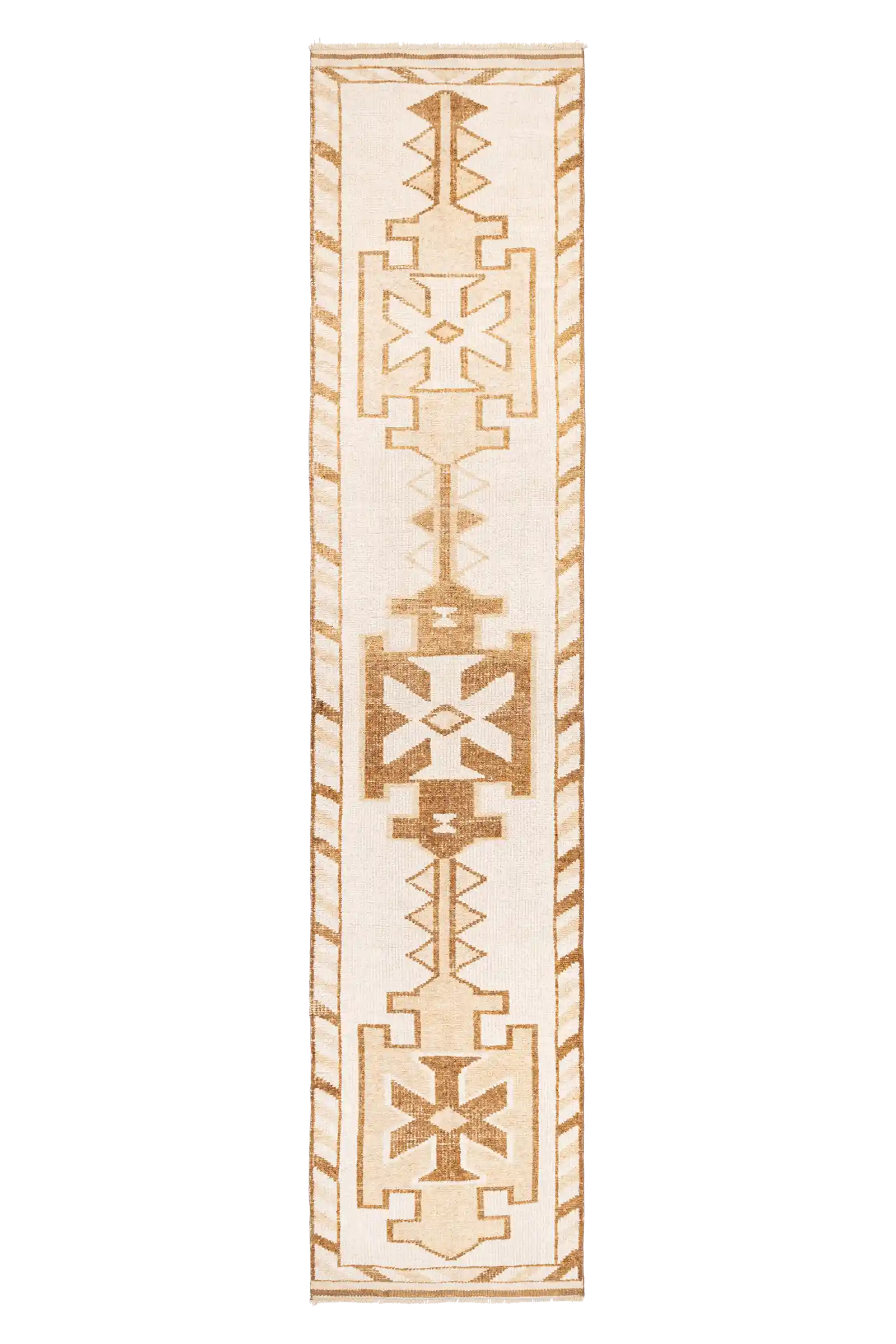
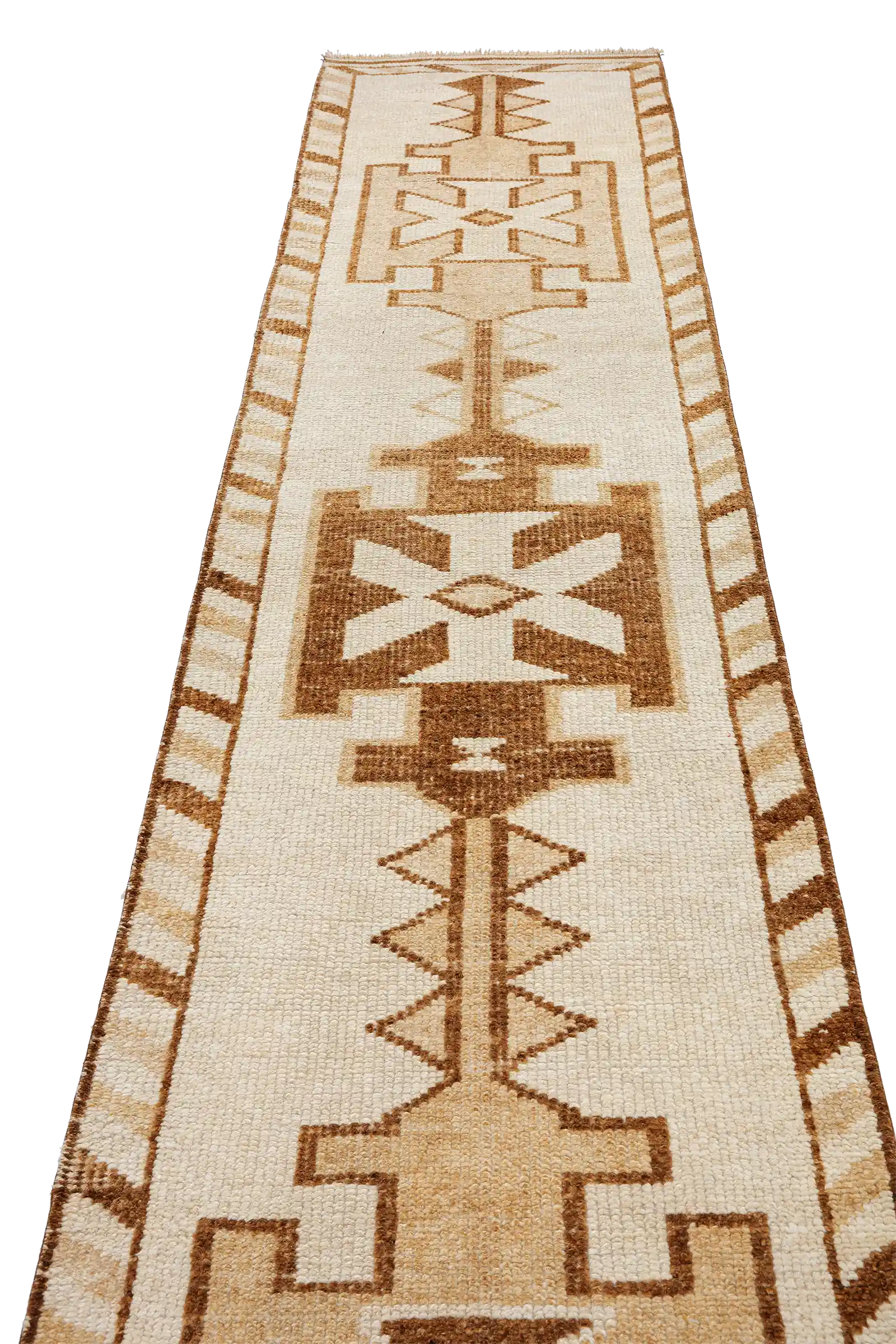
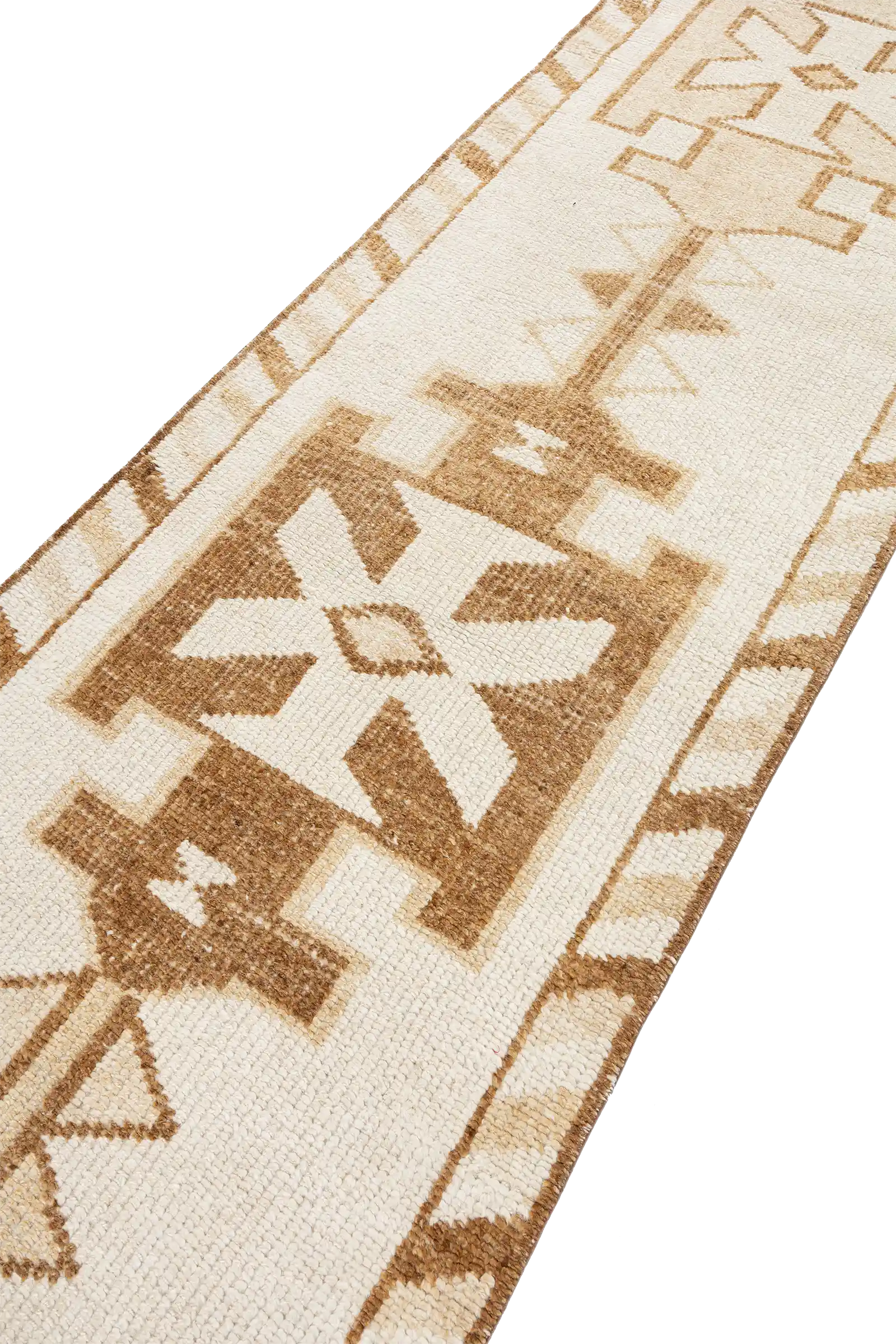

HERKI Vintage Carpet 383x84cm
Hand-woven unique piece – not reproducible
HERKI Vintage Carpet 383x84cm
Wild Heart Free Soul
Kastanienallee 55
10119 Berlin
Germany
Woven memory from Anatolia
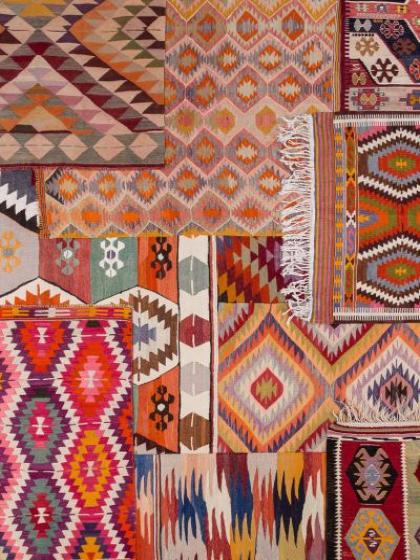
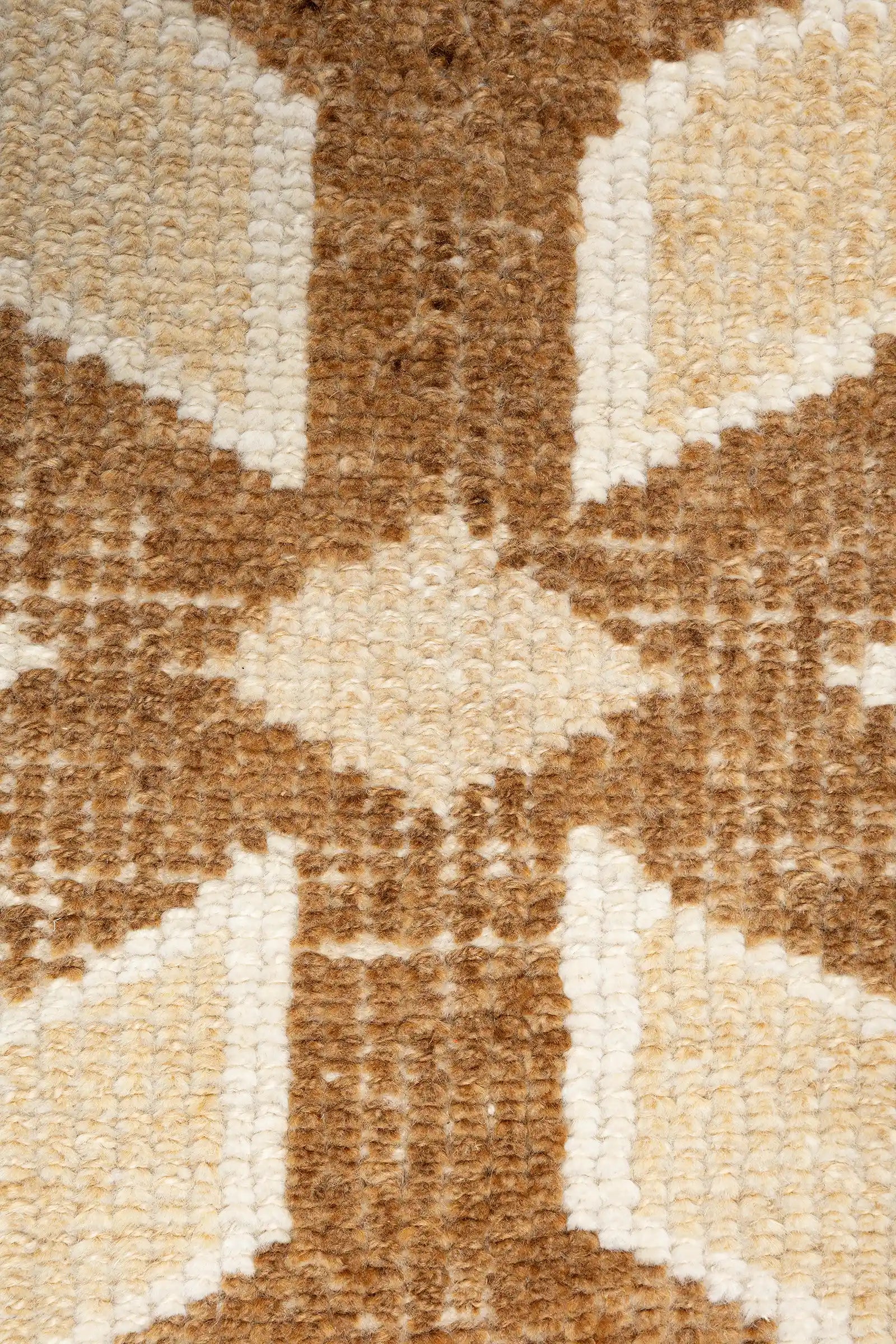
This handwoven vintage kilim is a unique piece, born from the quiet power of Anatolian women who translated their world into patterns. Crafted from 100% hand-spun sheep's wool (sometimes combined with cotton or goat hair), each rug carries its own story – of protection, beauty, and connection.
Kilim symbols and their interpretation
The patterns and motifs in our kilims originate from a centuries-old symbolic language deeply rooted in Anatolian culture. Common symbols include:
- Göz (Eye): Protection, clarity, defense against evil
- Su Yolu (watercourse): flow of life, change, renewal
- Elibelinde: Feminine power, fertility, sincerity
- Kurt Ağızı: Vigilance, protection from all directions
- Küpe: Love, harmonious relationships
- Bukağı: Responsibility, family cohesion
These symbols make the carpet a silent carrier of meaning – tangible for all who inhabit it.
Color world & texture
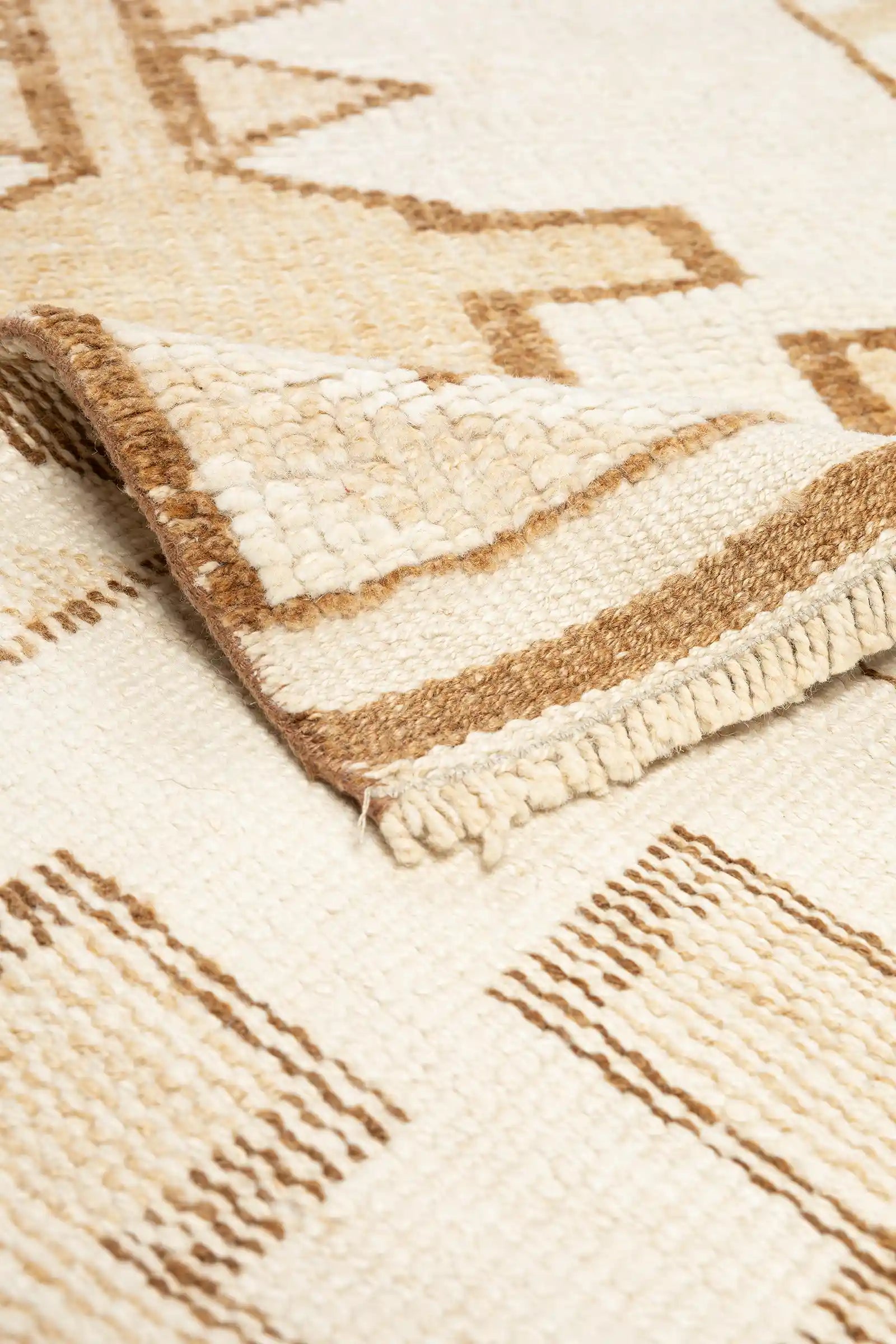
Our kilims feature a natural, warm color palette—from terracotta to sand, from indigo to pistachio green. Subtle abrash gradients add depth and vibrancy, while the flat, hand-woven structure reveals a pleasant tactile quality and archaic beauty.
Spatial effect & use
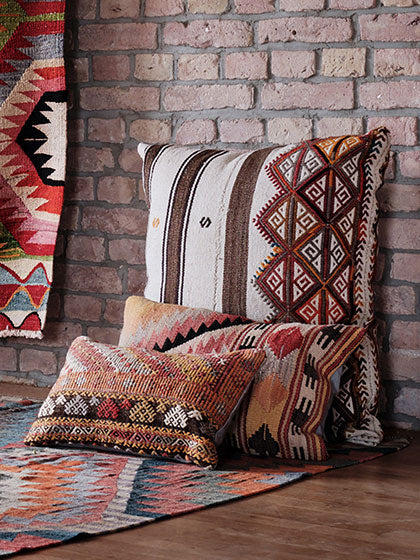
Whether as a central statement in the living room, a tranquil island in the bedroom, or as wall art, a vintage kilim brings more than just style: it brings atmosphere, history, and a tangible sense of grounding to your room.
Gently restored & maintained
Like all pieces at Wild Heart Free Soul, this kilim has been carefully cleaned —with olive soap, water, and sunlight —and, where necessary, carefully restored . This preserves its soul while also being ready for new beginnings.
A kilim from Wild Heart Free Soul is more than just a carpet.
It is a piece of woven memory – warm, meaningful and full of quiet power.
A home for your feet. And for your heart.
Choose options
Hand-woven unique piece – not reproducible
Hand-woven unique piece – not reproducible
- Vintage carpet unique - only one in stock!
- Material: 100% high-quality, hand-spun sheep's wool
- Processing: Flat-woven by hand on a traditional wooden loom
- Age: Vintage / Semi-antique. Approx. 1960s
- Condition: Vintage in mint quality due to complex cleaning and restoration process
- Origin: Herki, Anatolia
- Dimensions: 383cm x 84cm , height : 3mm
Anatolian kilims are far more than textile objects—they are woven memories, personal messages, and expressions of living culture. [...] Each kilim is restored with time, care, and respect. [...]
A kilim from Wild Heart Free Soul is not a product.
He is an inheritance. A woven wish.
And perhaps a companion for your home of tomorrow.
A kilim is a long-lasting companion—if treated with love and cared for carefully, it can last for many generations to come. It doesn't require extensive care, but rather the right kind.
We recommend gently vacuuming or beating the kilim once or twice a month to remove dust and dirt. Please do not use a rotary vacuum cleaner for this purpose; ideally, use a brush attachment or a gentle handheld device. Too frequent, intensive vacuuming can wear out the fibers over time.
Every few months, it's worth turning the kilim over and vacuuming the back as well. Rotating the rug slightly once a year ensures even wear and maintains the balance of the weave.
For basic cleaning, we recommend a professional hand wash every 3 to 5 years – using a pH-neutral shampoo or olive soap, gently worked in by hand, and thoroughly rinsed. Please never dry or steam clean your kilim – this will damage the fibers. If you need assistance choosing a suitable cleaner, we'd be happy to advise you. We work with experienced oriental rug specialists and are happy to share our special rates.
And if an accident does occur: Immediately dab fresh stains with a clean, dry cloth. If necessary, gently dab with a little olive soap and a slightly damp cloth – without rubbing or soaking. For stubborn stains, please consult a specialist immediately. Liquids that spread along the fibers can become permanently trapped, especially in flat weaves.
Dried food residue can usually be carefully scraped or brushed off – ideally with a steady hand and without haste.