
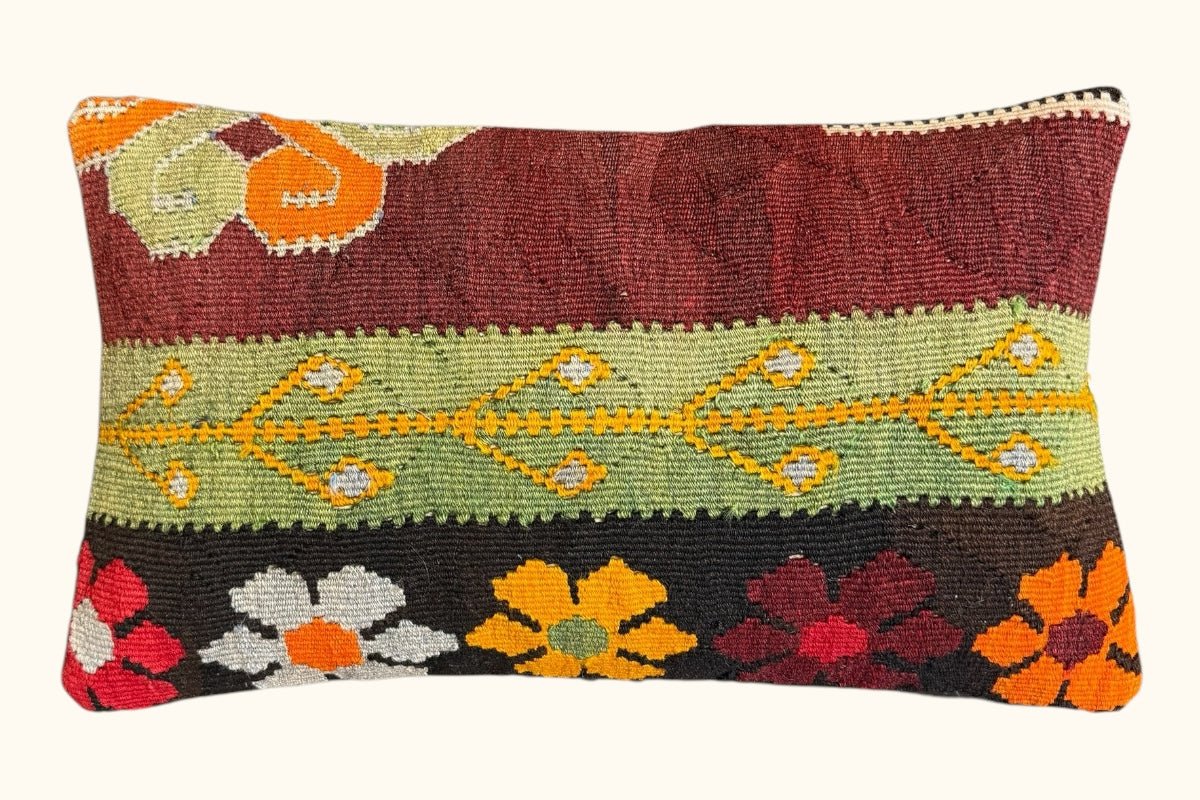
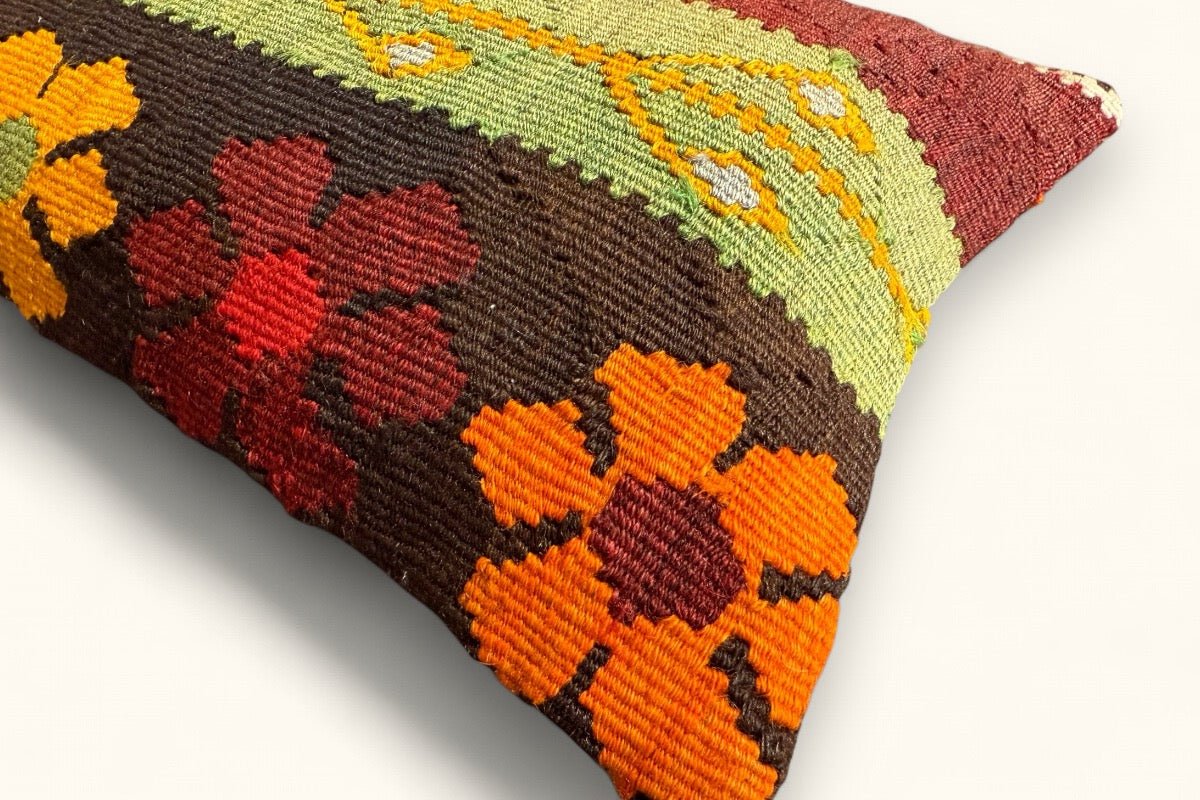
Kelim Pillow Asel 50x30cm
A Unique Piece from a Vintage Kilim – Anatolian Craftsmanship for Your Home
With this unique kilim cushion, you bring a piece of history and individuality into your home. The front is made from an original Anatolian vintage kilim, hand-woven in the mid-20th century.
- Dimensions: 50 x 30 cm
- Front Material: 100% sheep wool – soft, warm, and durable
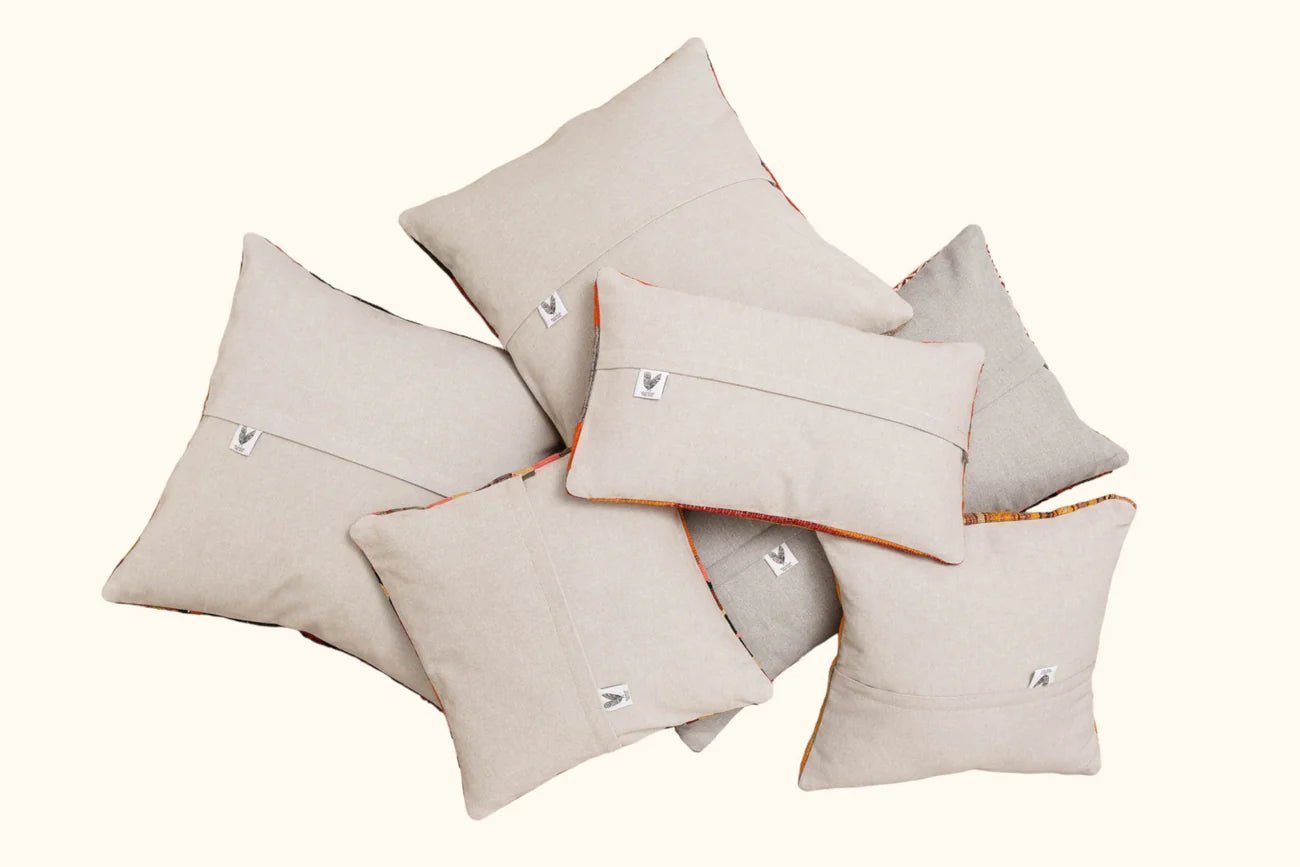
- Back Material: 100% cotton – high-quality and pleasant
The vibrant colors and geometric patterns of Anatolian kilims create a unique atmosphere and bring cultural heritage to any space. Each pattern tells its own story and brings the tradition and symbolism of Anatolia into your home.
Note: The cushion comes without filling. A suitable cushion insert can be ordered separately here.
Kelim Pillow Asel 50x30cm
Wild Heart Free Soul
Kastanienallee 55
10119 Berlin
Germany
Choose options
The traditional and timeless patterns of Anatolia make our vintage cushions very special. They are the meaningful symbols of a millennia-old nomadic tradition, intended to bestow love, blessings, and protection upon the home and its inhabitants.
High-quality materials such as hand-spun sheep's wool, goat hair, or cotton ensure a high-quality, durable product.
This cushion cover was lovingly sewn in our Wild Heart Free Soul atelier in Istanbul from a fragment of a hand-woven vintage kilim. The kilim was professionally cleaned before processing, but age-related wear and natural irregularities are unavoidable in unique, handcrafted vintage rugs. The back is made of recycled cotton and features a zipper.
Anatolian kilims are far more than mere textile utility items – they are woven memories, personal messages, and an expression of living culture. For generations, women from nomadic tribes and villages wove their wishes, hopes, and stories into the fabric – freely, intuitively, and full of symbolism.
This kilim was also woven in an Anatolian home – from the wool of their own sheep, shorn, washed, combed, and hand-spun. The yarns were often dyed with natural pigments from madder, weld, walnut, or indigo – but from the 1950s onwards, synthetic dyes increasingly found their way into the villages. The world became faster, more colourful – not every kilim remained purely plant-dyed. Many pieces from the 1960s and 1970s bear the traces of a cultural transition in their tones: between old and new, craftsmanship and modernity.
Weaving was a ritual act – accompanied by songs, stories, silence. Often several women sat together at the loom: mother, grandmother, sister, neighbour. Every knot, every line, every symbol carried meaning – protection, fertility, connection, strength. Symbols like the eye (Göz), the cosmic mother (Elibelinde), or the scorpion became carriers of deep messages.
They were used, loved, passed down – and some of them slept long in chests until one day they came back into the light.
Today, we clean and restore these pieces with the utmost respect: washed with olive soap, dried in the sun of Antalya, repaired in our Istanbul studio.
Some pieces are with us for only a few months, others accompany us for years – because we rush nothing. Every kilim is restored with time, care, and respect. Some wait for the right restorer, for the summer months to bathe in the sunlight – for their silent transformation back into a living work of art.
A kilim from Wild Heart Free Soul is not a product.
It is a legacy. A woven wish.
And perhaps a companion for your home of tomorrow.
A kilim is a long-lasting companion – treated with love and cared for attentively, it can outlast many more generations. It doesn't require elaborate care, but above all, the right kind of care.
We recommend gently vacuuming or shaking out your kilim once or twice a month to remove dust and dirt. Please do not use a rotating vacuum cleaner; instead, ideally, use a brush attachment or a gentle handheld device. Too frequent, intensive vacuuming can eventually fatigue the fibers.
Every few months, it's worthwhile to turn the kilim over and vacuum the underside as well. Rotating the rug slightly once a year ensures even wear and maintains the balance in the weave.
For a thorough cleaning, we recommend a professional hand wash every 3 to 5 years – using pH-neutral shampoo or olive soap, gently worked in by hand and thoroughly rinsed. Please never put your kilim in dry cleaning or steam cleaning – this would damage the fibers. If you need assistance in choosing a suitable cleaner, we are happy to advise you. We work with experienced Oriental rug specialists and are pleased to pass on our special rates.
And if an accident does happen: Dab fresh stains immediately with a clean, dry cloth. If necessary, you can carefully dab with a little olive soap and a slightly damp cloth – without rubbing, without soaking. For stubborn dirt, please consult a professional directly. Liquid that spreads along the fibers, especially in flatweaves, can become permanently trapped.
Dried food residues can usually be carefully scraped off or brushed out – ideally with a steady hand and without haste.