
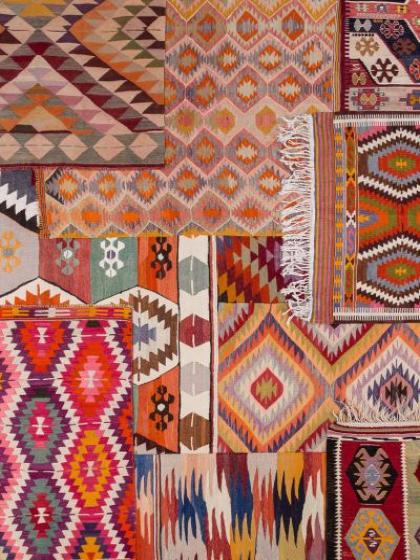
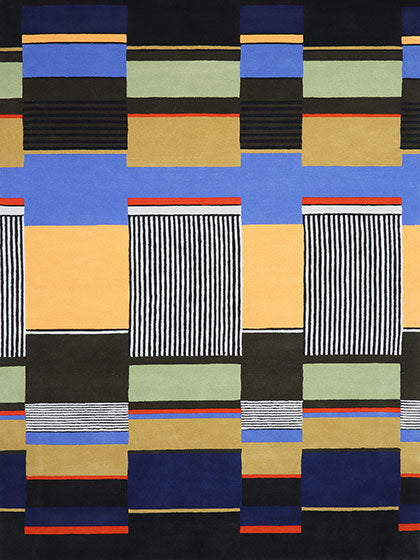
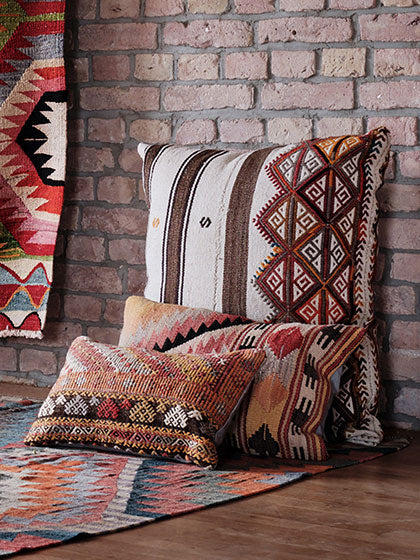
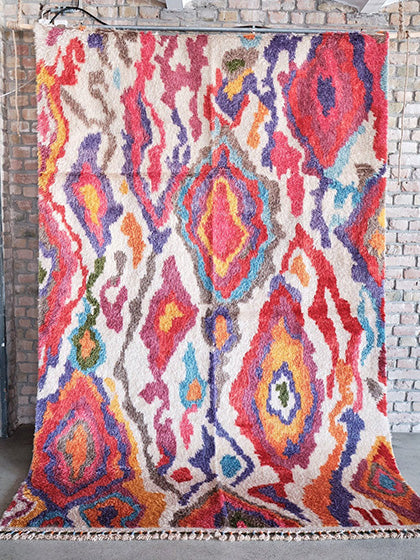

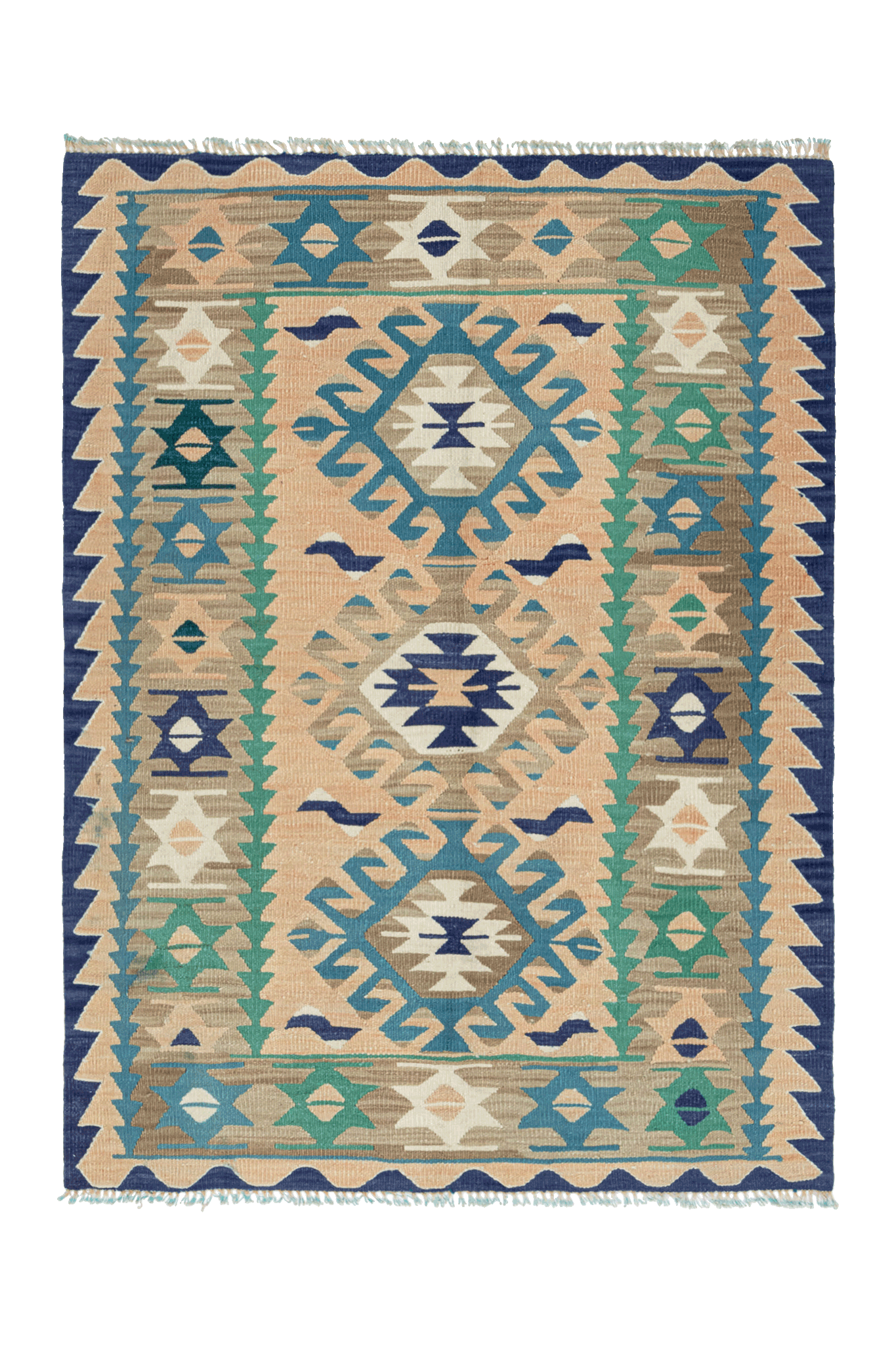

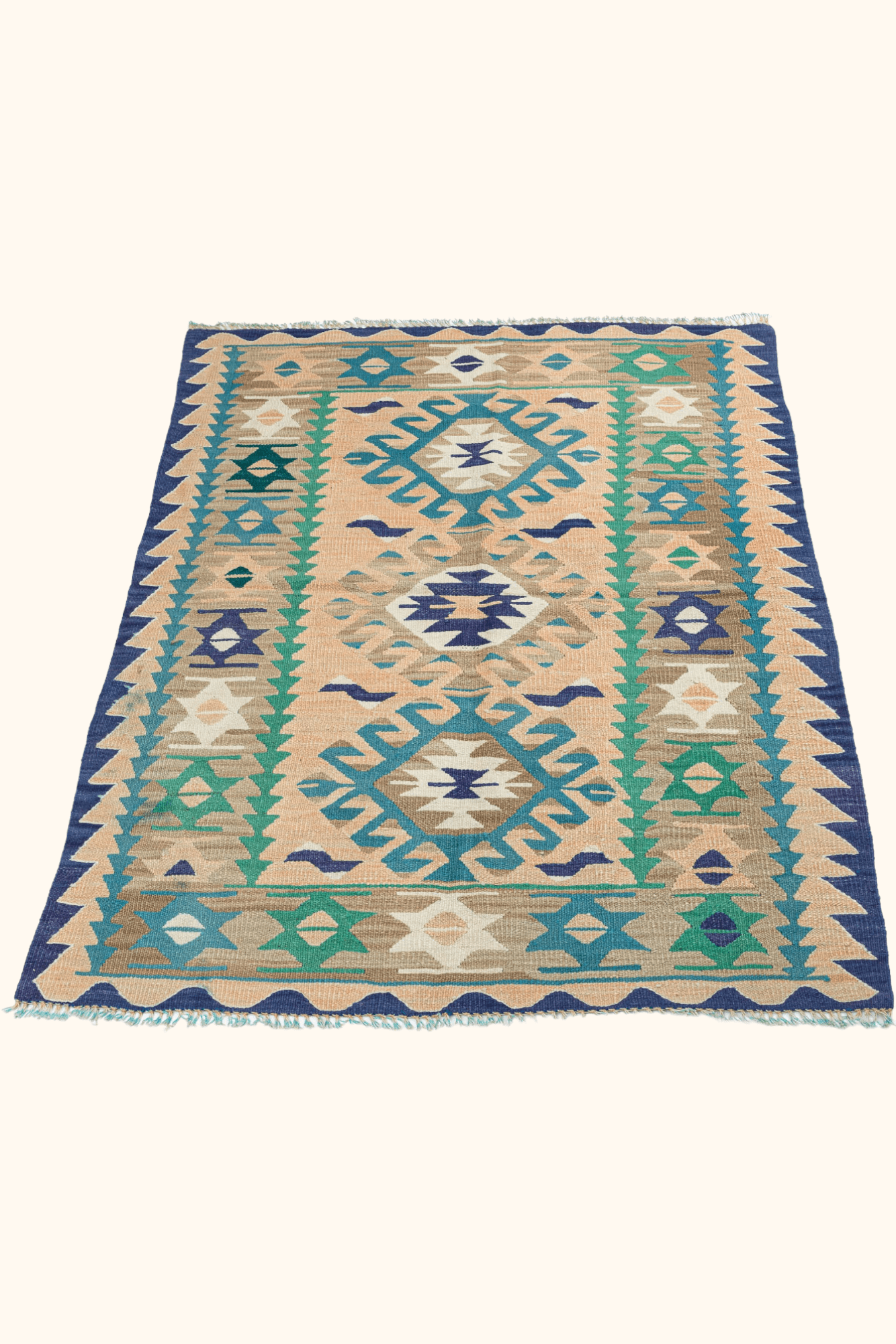
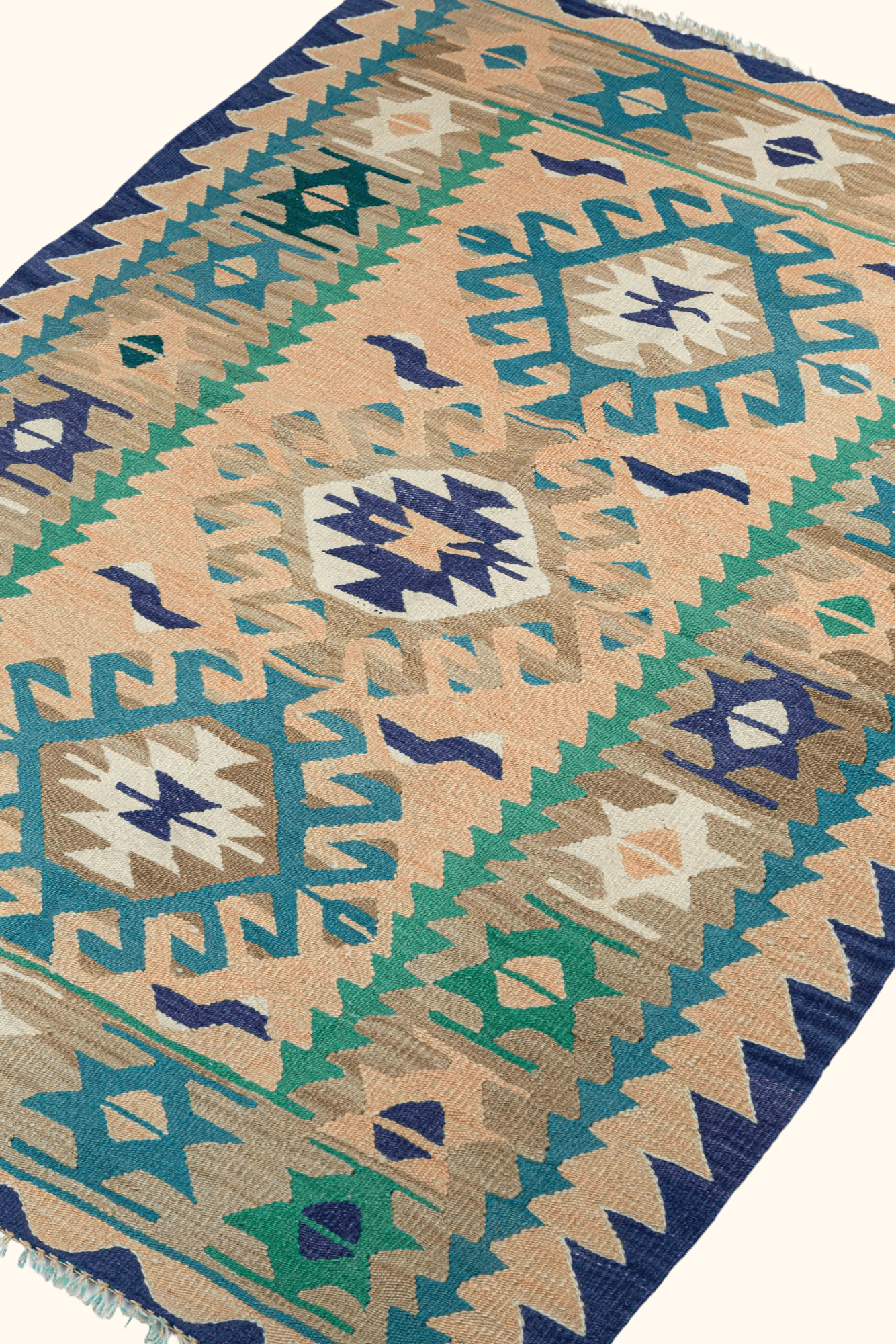
USAK Vintage Kilim 121x87cm
Hand-woven unique piece – not reproducible
USAK Vintage Kilim 121x87cm
Wild Heart Free Soul
Kastanienallee 55
10119 Berlin
Germany
Kilim rug, handwoven from sheep's wool
Choose options
Hand-woven unique piece – not reproducible
Hand-woven unique piece – not reproducible
- Unique vintage carpet - only one in stock!
- Material: 100% high-quality, hand-spun sheep's wool
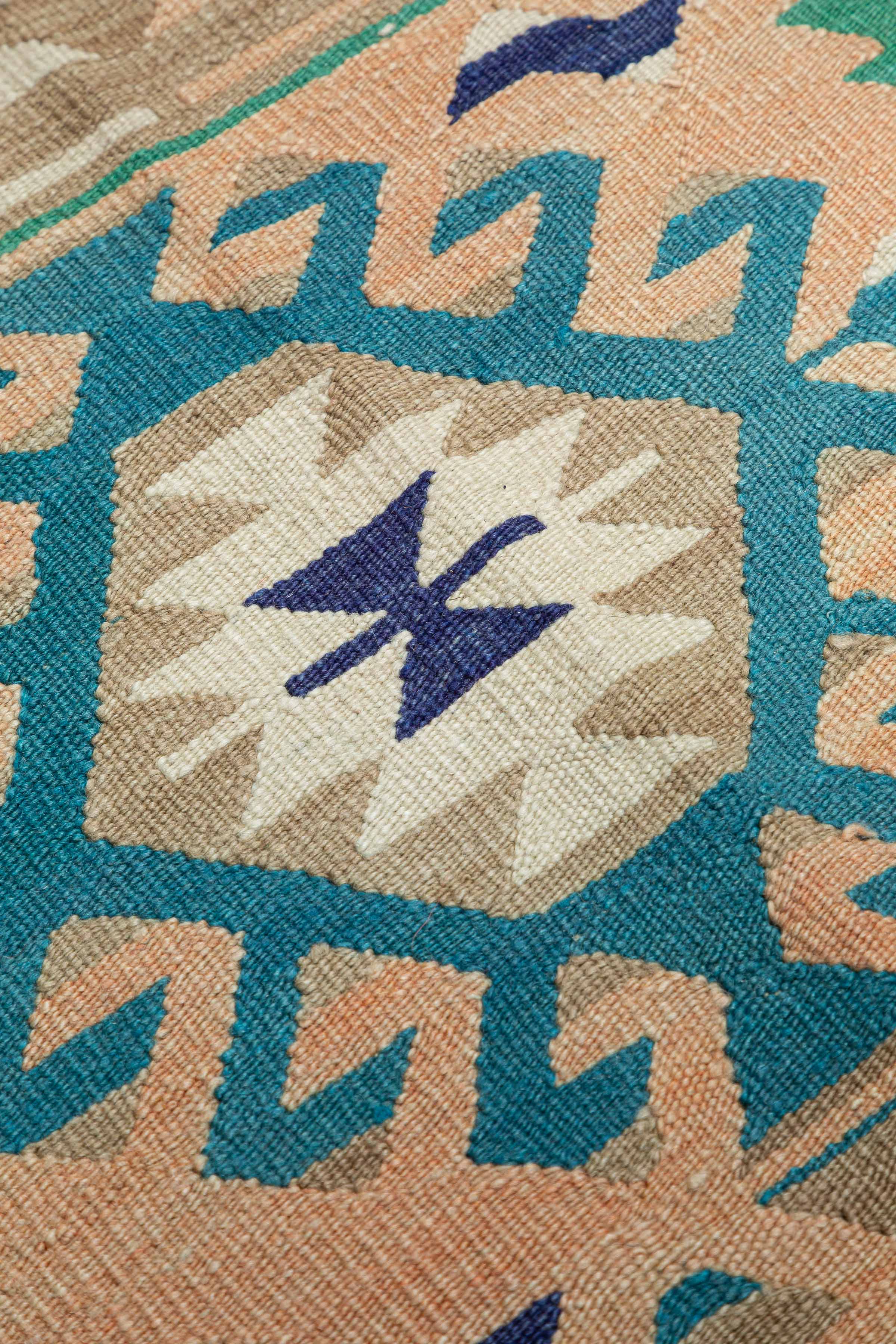
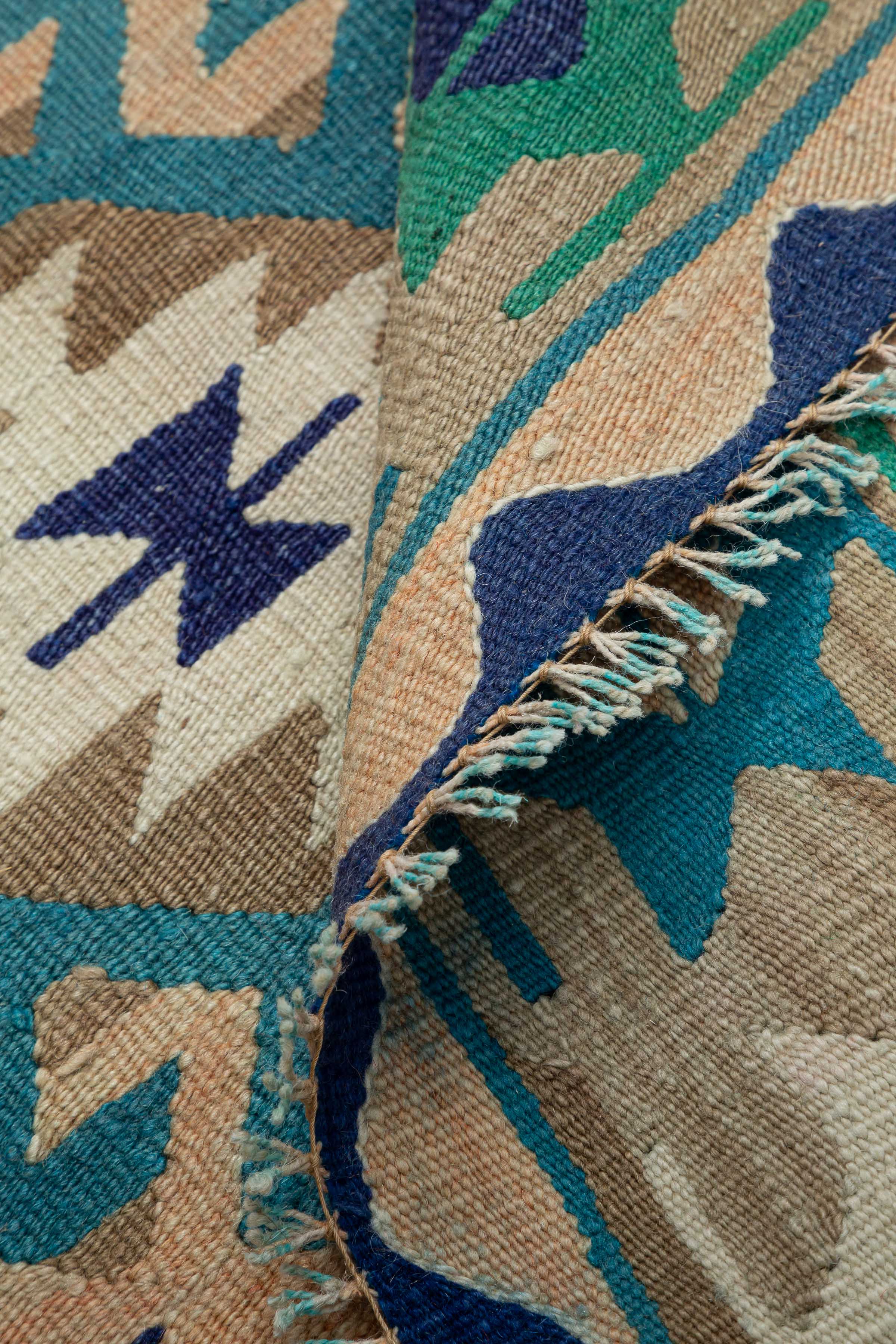
- Processing: Flat-woven by hand on a traditional wooden loom
- Age: Vintage/Semi-antique. Circa 1960s
- Condition: Vintage in mint quality thanks to an extensive cleaning and restoration process
- Origin: Uşak, Anatolia
- Dimensions: 121cm x 87cm , height : 3mm
Region of origin
Anatolia makes up most of modern-day Türkiye. Carpets from this region are characterized by their indigenous, geometric patterns - with many symbols that reflect the life of a traditional way of life in harmony with nature. The legacy of an ancient, schematic culture of the Turkic peoples, transmitted from generation to generation in the form of the art of weaving.
symbolism
In Anatolia, traditional kilims and carpets used a variety of symbols and patterns that have their origins in the Neolithic. For thousands of years, nomadic and village women have woven themes into their rugs that are meaningful to their lives. One of the main symbols is the figure of “Elibelinde”, which represents the Cosmic Mother and her creative feminine power. Other motifs represent wishes, such as happiness and children, while others serve to protect against threats such as wolves, scorpions or the evil eye. Motifs were often combined when woven into patterns on kilims, thereby acquiring complex meanings. Each carpet tells its own story in the form of woven poetry.
Manufacturing
Our vintage kilims and carpets were made entirely by hand from the beginning of the 20th century until the 1970s. In the first step, the weaver sheared, washed, combed and hand-spun the wool from her own sheep and goats into yarn.
The yarn bundles were then dyed in a complex, manual process with natural pigments or alanine dyes. Every single shade had to be dyed individually. By dyeing independently, the weaver was able to give free rein to her creativity and had control over the coloring. At the same time, the result was subject to a complex interaction of many factors and thus always resulted in a color play of different nuances of a color tone. This shading in the yarn or in the finished kilim or carpet is called abrasch. After the yarn was finished, the warp strands were pulled as tightly as possible over the warp beam of the wooden loom. Only then could the weaver begin weaving her kilim. Every motif, every symbol, every surface was woven by hand with a lot of love and patience until the finished kilim was created and the ends of the kilim were knotted and often decorated with elaborately braided fringes. The process of making often took several months, sometimes years, and was carried out either by a single weaver or by several women at the same time. Grandmother, mother, sisters, other family members or neighbors often sat at the same time at a loom and told each other stories or sang songs together while weaving. Weaving a kilim was not just for the purpose of subsequent use, but the whole process was a ritual, a ceremony, a form of meditation and prayer, a form of expression of the weaver's emotions and a medium for the stories of bygone times in the form of woven poetry to pass on.
material
Wool is the most commonly used fiber in making Anatolian carpets. Not only is it abundant in Turkey, it is also a natural and very high quality material. In particular, the hand-spun wool has particularly long fibers and a high proportion of lanolin (wool fat). This makes it very durable, long-lasting and antibacterial.
Natural sheep's wool is a living material that, through the influence of sun, air and water and through careful use, becomes increasingly softer and shinier over the years. A material that ages beautifully, is completely environmentally friendly and free of harmful substances. It has the ability to clean and regenerate itself and brings warmth, a good indoor climate and pleasant room acoustics to every home. In addition, sheep's wool and goat hair have the ability to ground our bodies and dissipate negative electrostatic charges.
These positive properties are particularly useful in large cities and when using electronic devices.
Cleaning and restoration
The cleaning process of our vintage Kelim carpets takes place cyclically and in harmony with nature. In the summer months, our carpets are first washed thoroughly with water and olive soap and then further cleaned using the power of the sun in our “Kilim Field” in Antalya for up to three months.
Tanning and airing out removes stubborn stains and discoloration, odors, moths and bacteria.
This intensive and natural cleaning process means we can completely avoid environmentally harmful chemicals or health-damaging anti-moth agents.
After sunbathing in Antalya, our kilims and carpets are mechanically dusted and then sent to Istanbul. In our studio in the old town of Sultanahmet, each carpet is individually stretched into shape and the ends are re-knotted using a special technique so that the fabric cannot come loose. Holes or discolored areas are rewoven true to the original. The complete cleaning and restoration process takes between six months and two years, depending on the kilim.
If treated with love and careful care, our kilims and carpets can last for many more generations. Our carpets don't require a lot of care, but they do require the right care. We recommend that you vacuum or carefully vacuum your carpet regularly to remove dirt and grime. It is enough to vacuum your carpet once or twice a month. Vacuuming too often can wear out the knots and fibers more quickly. If you have a suction attachment on your vacuum, use that instead of a rotary vacuum.
Every few months, you should turn your carpet over and vacuum the back to remove dirt from the underside of the carpet. It's also helpful to rotate your carpet once a year to ensure even wear.
We recommend having your carpet professionally hand washed every 3 to 5 years. Please do not take it for steam or dry cleaning - this will definitely damage the carpet! Choose a carpet cleaner that uses a pH-neutral shampoo or olive soap when handwashing. The soap is worked into the carpet by hand using a soft-bristled brush and then rinsed thoroughly. If you have any questions or need assistance choosing a carpet cleaning service, please feel free to contact us. We work with trustworthy oriental carpet cleaners and restorers and can pass on discounted conditions to our customers.
A stain, now what?
Blot the stain with a dry cloth until it is dry. If necessary, you can dab with a slightly damp cloth and a little olive soap. Please do not wash your carpet yourself. If the stain doesn't come out, contact an oriental rug specialist immediately for cleaning. Adding a lot of liquid can make stains difficult to remove and may even make them worse. This is because moisture spreads along the fibers and can become trapped in carpets with horizontal fibers (like flatweave).
Leftover food can be easily scraped off or brushed out when it is dry.