
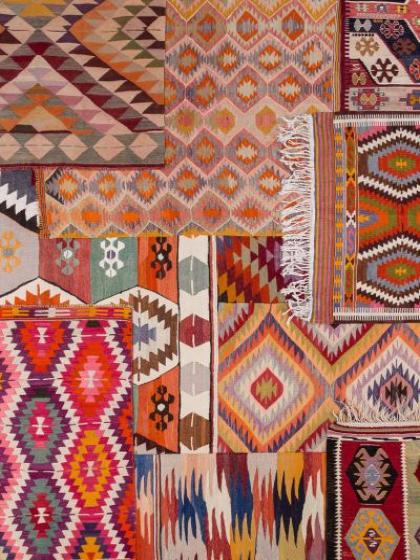
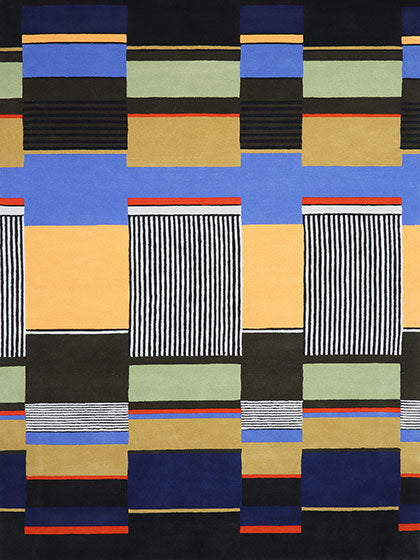
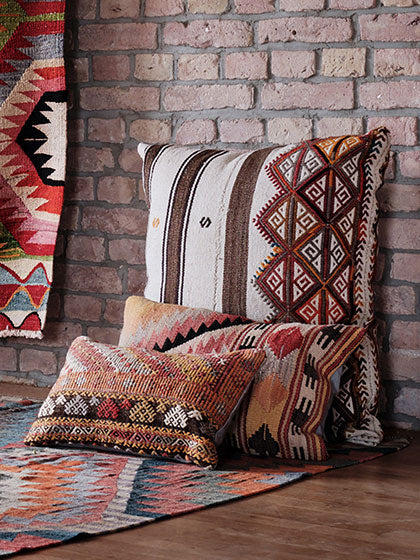
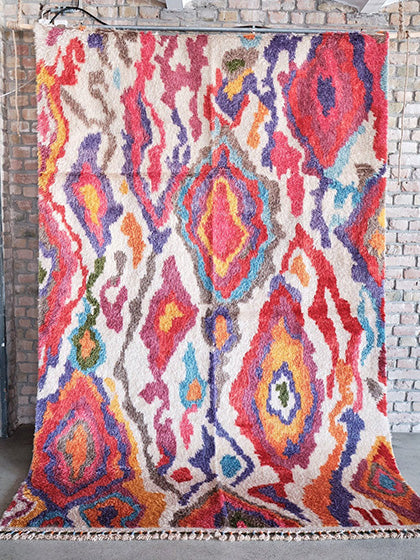

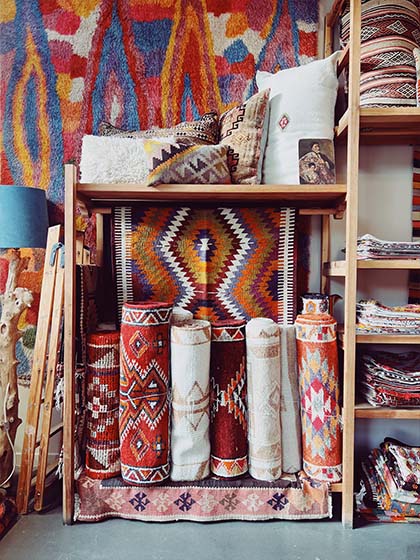


Vintage Kilim Anamur (294 x 152cm)
Hand-woven unique piece – not reproducible
Vintage Kilim Anamur (294 x 152cm)
Wild Heart Free Soul
Kastanienallee 55
10119 Berlin
Germany
This original vintage kilim was hand-woven in Anatolia in the second half of the 20th century by a nomad woman. It's made of hand spun, naturally dyed sheep wool. Before starting the weaving, the artist was sheering her sheep, cleaning, combing and spinning the wool to have the best yarn for her kilim. After spinning the wool she was dying it in a complex process with natural dyes. This whole process could take a year or even longer.
This woven piece of art is one of a kind and was made for self use. Nomads and farmers were using their kilims as rugs on the floor, as tents or wall hangings, as covers or transportation bags. The patterns and symbols on kilims always have special meanings. They are standing for protection, blessings, abundance or the unity of lovers.
All Wild Heart Free Soul kilims are cleaned in a natural way and restored professionally under our guidance and control. We guarantee authenticity, high quality and fair trade.
We are happy to answer all your questions and to give interior design consultations. Just drop an email to bazaar@wildheartfreesoul.com or visit our Kilim Temple in Berlin.
Material: 100% hand-spun sheep wool
Size: 294x152cm
periods: ca 1950. Semi-antique
Origin: Anamur, Anatolia
Choose options
Hand-woven unique piece – not reproducible
Hand-woven unique piece – not reproducible
Anatolian flat-woven kilim rug made from sheep's wool. Woven from recycled wool from old kilim.
Natural irregularities are characteristic of our handmade vintage rugs.
- Material: 100% hand-spun sheep's wool, highest quality
- Processing: Flatwoven by hand on a traditional, horizontal wooden loom
- Age: New
- Origin: Manisa, Anatolia
- Size: 294x152cm, height: 3mm
REGION OF ORIGIN
Central Anatolia
MANUFACTURING PROCESS
All our vintage kilims and rugs are entirely handmade. The sheep's wool yarn was spun and dyed by hand. Due to the high lanolin content, the high-quality sheep's wool shines particularly beautifully. A sheen that cannot be achieved with industrially manufactured yarn. After the laborious production of the yarn, the kilim was woven by hand on a traditional wooden loom. This process usually took several months, sometimes even more than a year.
CLEANING AND RESTORATION
Our cleaning process takes place cyclically, in harmony with nature.
Our carpets are only cleaned once a year at the beginning of summer. We only use water and pure olive soap for this. Then we work with the power of the sun to intensify the cleaning process. The strong Antalya sun between June and September bleaches stubborn stains and discolouration, removes odours, is antibacterial and keeps moths and insects away. Thanks to the power of nature, we can completely do without environmentally harmful chemicals.
Our kilims are then mechanically dusted and sent to Istanbul. In our workshop in Sultanahmet, each rug is individually stretched into shape and the ends are re-knotted using the Iranian knot technique to prevent the weave from unraveling. In addition, holes and discolored areas are restored true to the original. The complete cleaning and restoration process takes between six months and two years, depending on the kilim.
M material
Sheep wool is a natural and very high quality material. All of our carpets are woven from hand-spun sheep's wool yarn, which consists of long hairs and has a very high proportion of lanolin (wool fat). This makes TERI
material
Sheep wool is a natural and very high quality material. All of our carpets are woven from hand-spun sheep's wool yarn, which consists of long hairs and has a very high proportion of lanolin (wool fat). This makes it L
Sh
material
Sheep wool is a natural and very high quality material. All of our carpets are woven from hand-spun sheep's wool yarn, which consists of long hairs and has a very high proportion of lanolin (wool fat). This means that isfwolle is an n
material
Sheep wool is a natural and very high quality material. All of our carpets are woven from hand-spun sheep's wool yarn, which consists of long hairs and has a very high proportion of lanolin (wool fat). This makes it a natural and very high quality M
material
Sheep wool is a natural and very high quality material. All of our carpets are woven from hand-spun sheep's wool yarn, which consists of long hairs and has a very high proportion of lanolin (wool fat). This makes it so
material
Sheep wool is a natural and very high quality material. All of our carpets are woven from hand-spun sheep's wool yarn, which consists of long hairs and has a very high proportion of lanolin (wool fat). This means that
material
Sheep wool is a natural and very high quality material. All of our carpets are woven from hand-spun sheep's wool yarn, which consists of long hairs and has a very high proportion of lanolin (wool fat). This is how our carpets were made
material
Sheep wool is a natural and very high quality material. All of our carpets are woven from hand-spun sheep's wool yarn, which consists of long hairs and has a very high proportion of lanolin (wool fat). This isus h
material
Sheep wool is a natural and very high quality material. All of our carpets are woven from hand-spun sheep's wool yarn, which consists of long hairs and has a very high proportion of lanolin (wool fat). This makes it spun sh
material
Sheep wool is a natural and very high quality material. All of our carpets are woven from hand-spun sheep's wool yarn, which consists of long hairs and has a very high proportion of lanolin (wool fat). This is fine
material
Sheep wool is a natural and very high quality material. All of our carpets are woven from hand-spun sheep's wool yarn, which consists of long hairs and has a very high proportion of lanolin (wool fat). This is how it is woven
material
Sheep wool is a natural and very high quality material. All of our carpets are woven from hand-spun sheep's wool yarn, which consists of long hairs and has a very high proportion of lanolin (wool fat). This isus l
material
Sheep wool is a natural and very high quality material. All of our carpets are woven from hand-spun sheep's wool yarn, which consists of long hairs and has a very high proportion of lanolin (wool fat). This means H
material
Sheep wool is a natural and very high quality material. All of our carpets are woven from hand-spun sheep's wool yarn, which consists of long hairs and has a very high proportion of lanolin (wool fat). This makes it
material
Sheep wool is a natural and very high quality material. All of our carpets are woven from hand-spun sheep's wool yarn, which consists of long hairs and has a very high proportion of lanolin (wool fat). This means they exist and have a very high level
material
Sheep wool is a natural and very high quality material. All of our carpets are woven from hand-spun sheep's wool yarn, which consists of long hairs and has a very high proportion of lanolin (wool fat). This makes sense
material
Sheep wool is a natural and very high quality material. All of our carpets are woven from hand-spun sheep's wool yarn, which consists of long hairs and has a very high proportion of lanolin (wool fat). This makes it L
material
Sheep wool is a natural and very high quality material. All of our carpets are woven from hand-spun sheep's wool yarn, which consists of long hairs and has a very high proportion of lanolin (wool fat). This makes isnolin (wool fat)
material
Sheep wool is a natural and very high quality material. All of our carpets are woven from hand-spun sheep's wool yarn, which consists of long hairs and has a very high proportion of lanolin (wool fat). This shows. D
material
Sheep wool is a natural and very high quality material. All of our carpets are woven from hand-spun sheep's wool yarn, which consists of long hairs and has a very high proportion of lanolin (wool fat). This makes the wool particularly dirt-resistant, w
material
Sheep wool is a natural and very high quality material. All of our carpets are woven from hand-spun sheep's wool yarn, which consists of long hairs and has a very high proportion of lanolin (wool fat). This makes it easier to eat
material
Sheep wool is a natural and very high quality material. All of our carpets are woven from hand-spun sheep's wool yarn, which consists of long hairs and has a very high proportion of lanolin (wool fat). This makes it resistant and
material
Sheep wool is a natural and very high quality material. All of our carpets are woven from hand-spun sheep's wool yarn, which consists of long hairs and has a very high proportion of lanolin (wool fat). This isntib
material
Sheep wool is a natural and very high quality material. All of our carpets are woven from hand-spun sheep's wool yarn, which consists of long hairs and has a very high proportion of lanolin (wool fat). This makes it iscterial.
Sh
material
Sheep wool is a natural and very high quality material. All of our carpets are woven from hand-spun sheep's wool yarn, which consists of long hairs and has a very high proportion of lanolin (wool fat). This means that wool is also a living M
material
Sheep wool is a natural and very high quality material. All of our carpets are woven from hand-spun sheep's wool yarn, which consists of long hairs and has a very high proportion of lanolin (wool fat). This makes it so
material
Sheep wool is a natural and very high quality material. All of our carpets are woven from hand-spun sheep's wool yarn, which consists of long hairs and has a very high proportion of lanolin (wool fat). This means that
material
Sheep wool is a natural and very high quality material. All of our carpets are woven from hand-spun sheep's wool yarn, which consists of long hairs and has a very high proportion of lanolin (wool fat). This means that you eat through the use and influence of sun, air and water
material
Sheep wool is a natural and very high quality material. All of our carpets are woven from hand-spun sheep's wool yarn, which consists of long hairs and has a very high proportion of lanolin (wool fat). This means you eat with the J
material
Sheep wool is a natural and very high quality material. All of our carpets are woven from hand-spun sheep's wool yarn, which consists of long hairs and has a very high proportion of lanolin (wool fat). As a result, your hair becomes increasingly softer and shinier. An M
material
Sheep wool is a natural and very high quality material. All of our carpets are woven from hand-spun sheep's wool yarn, which consists of long hairs and has a very high proportion of lanolin (wool fat). This makes it so
material
Sheep wool is a natural and very high quality material. All of our carpets are woven from hand-spun sheep's wool yarn, which consists of long hairs and has a very high proportion of lanolin (wool fat). This means that
material
Sheep wool is a natural and very high quality material. All of our carpets are woven from hand-spun sheep's wool yarn, which consists of long hairs and has a very high proportion of lanolin (wool fat). This means you can eat in beauty
material
Sheep wool is a natural and very high quality material. All of our carpets are woven from hand-spun sheep's wool yarn, which consists of long hairs and has a very high proportion of lanolin (wool fat). This causes
material
Sheep wool is a natural and very high quality material. All of our carpets are woven from hand-spun sheep's wool yarn, which consists of long hairs and has a very high proportion of lanolin (wool fat). This makes it absolutely environmentally friendly and free of harmful substances
material
Sheep wool is a natural and very high quality material. All of our carpets are woven from hand-spun sheep's wool yarn, which consists of long hairs and has a very high proportion of lanolin (wool fat). This means that it is clean and regenerates itself.
CARE
With loving care
material
Sheep wool is a natural and very high quality material. All of our carpets are woven from hand-spun sheep's wool yarn, which consists of long hairs and has a very high proportion of lanolin (wool fat). Thanks to maintenance and regular care, a kilim from Wild He looks great
material
Sheep wool is a natural and very high quality material. All of our carpets are woven from hand-spun sheep's wool yarn, which consists of long hairs and has a very high proportion of lanolin (wool fat). This makes Free Soul itself n
material
Sheep wool is a natural and very high quality material. All of our carpets are woven from hand-spun sheep's wool yarn, which consists of long hairs and has a very high proportion of lanolin (wool fat). This means that many J
material
Sheep wool is a natural and very high quality material. All of our carpets are woven from hand-spun sheep's wool yarn, which consists of long hairs and has a very high proportion of lanolin (wool fat). This means you can still use it
material
Sheep wool is a natural and very high quality material. All of our carpets are woven from hand-spun sheep's wool yarn, which consists of long hairs and has a very high proportion of lanolin (wool fat). This makes it like
material
Sheep wool is a natural and very high quality material. All of our carpets are woven from hand-spun sheep's wool yarn, which consists of long hairs and has a very high proportion of lanolin (wool fat). This is the first T
material
Sheep wool is a natural and very high quality material. All of our carpets are woven from hand-spun sheep's wool yarn, which consists of long hairs and has a very high proportion of lanolin (wool fat). This means that Real kilim overd
material
Sheep wool is a natural and very high quality material. All of our carpets are woven from hand-spun sheep's wool yarn, which consists of long hairs and has a very high proportion of lanolin (wool fat). This means that there are several generators
material
Sheep wool is a natural and very high quality material. All of our carpets are woven from hand-spun sheep's wool yarn, which consists of long hairs and has a very high proportion of lanolin (wool fat). This is what happens.
Our kilims do not require much care,
material
Sheep wool is a natural and very high quality material. All of our carpets are woven from hand-spun sheep's wool yarn, which consists of long hairs and has a very high proportion of lanolin (wool fat). This makes it the right one. A kilim should be cleaned regularly and carefully
material
Sheep wool is a natural and very high quality material. All of our carpets are woven from hand-spun sheep's wool yarn, which consists of long hairs and has a very high proportion of lanolin (wool fat). This means that
material
Sheep wool is a natural and very high quality material. All of our carpets are woven from hand-spun sheep's wool yarn, which consists of long hairs and has a very high proportion of lanolin (wool fat). This means that or
material
Sheep wool is a natural and very high quality material. All of our carpets are woven from hand-spun sheep's wool yarn, which consists of long hairs and has a very high proportion of lanolin (wool fat). This causes the isus to be knocked. m gets stains
material
Sheep wool is a natural and very high quality material. All of our carpets are woven from hand-spun sheep's wool yarn, which consists of long hairs and has a very high proportion of lanolin (wool fat). This makes it f
material
Sheep wool is a natural and very high quality material. All of our carpets are woven from hand-spun sheep's wool yarn, which consists of long hairs and has a very high proportion of lanolin (wool fat). This means you should always eat with a slightly damp cloth
material
Sheep wool is a natural and very high quality material. All of our carpets are woven from hand-spun sheep's wool yarn, which consists of long hairs and has a very high proportion of lanolin (wool fat). This makes it super. Leftover food k
material
Sheep wool is a natural and very high quality material. All of our carpets are woven from hand-spun sheep's wool yarn, which consists of long hairs and has a very high proportion of lanolin (wool fat). This doesn't mean m
material
Sheep wool is a natural and very high quality material. All of our carpets are woven from hand-spun sheep's wool yarn, which consists of long hairs and has a very high proportion of lanolin (wool fat). This makes it im
material
Sheep wool is a natural and very high quality material. All of our carpets are woven from hand-spun sheep's wool yarn, which consists of long hairs and has a very high proportion of lanolin (wool fat). This means it is in a dried condition
material
Sheep wool is a natural and very high quality material. All of our carpets are woven from hand-spun sheep's wool yarn, which consists of long hairs and has a very high proportion of lanolin (wool fat). This makes it g
material
Sheep wool is a natural and very high quality material. All of our carpets are woven from hand-spun sheep's wool yarn, which consists of long hairs and has a very high proportion of lanolin (wool fat). This makes it quite easy
material
Sheep wool is a natural and very high quality material. All of our carpets are woven from hand-spun sheep's wool yarn, which consists of long hairs and has a very high proportion of lanolin (wool fat). This makes it ish
material
Sheep wool is a natural and very high quality material. All of our carpets are woven from hand-spun sheep's wool yarn, which consists of long hairs and has a very high proportion of lanolin (wool fat). As a result, isbkr
material
Sheep wool is a natural and very high quality material. All of our carpets are woven from hand-spun sheep's wool yarn, which consists of long hairs and has a very high proportion of lanolin (wool fat). This means that or
material
Sheep wool is a natural and very high quality material. All of our carpets are woven from hand-spun sheep's wool yarn, which consists of long hairs and has a very high proportion of lanolin (wool fat). This way you can brush.
A kilim should not l
material
Sheep wool is a natural and very high quality material. All of our carpets are woven from hand-spun sheep's wool yarn, which consists of long hairs and has a very high proportion of lanolin (wool fat). Thereby isnge in the n
material
Sheep wool is a natural and very high quality material. All of our carpets are woven from hand-spun sheep's wool yarn, which consists of long hairs and has a very high proportion of lanolin (wool fat). This means it is in good condition
material
Sheep wool is a natural and very high quality material. All of our carpets are woven from hand-spun sheep's wool yarn, which consists of long hairs and has a very high proportion of lanolin (wool fat). This makes us stay because he is there
material
Sheep wool is a natural and very high quality material. All of our carpets are woven from hand-spun sheep's wool yarn, which consists of long hairs and has a very high proportion of lanolin (wool fat). This means that k is forgiven
material
Sheep wool is a natural and very high quality material. All of our carpets are woven from hand-spun sheep's wool yarn, which consists of long hairs and has a very high proportion of lanolin (wool fat). That doesn't mean it. Desh
material
Sheep wool is a natural and very high quality material. All of our carpets are woven from hand-spun sheep's wool yarn, which consists of long hairs and has a very high proportion of lanolin (wool fat). We therefore do not recommend doing your own laundry. If you d
material
Sheep wool is a natural and very high quality material. All of our carpets are woven from hand-spun sheep's wool yarn, which consists of long hairs and has a very high proportion of lanolin (wool fat). This means there is a need for h
material
Sheep wool is a natural and very high quality material. All of our carpets are woven from hand-spun sheep's wool yarn, which consists of long hairs and has a very high proportion of lanolin (wool fat). This means your kilim can be treated to a wash, i.e
material
Sheep wool is a natural and very high quality material. All of our carpets are woven from hand-spun sheep's wool yarn, which consists of long hairs and has a very high proportion of lanolin (wool fat). If so, please contact me
material
Sheep wool is a natural and very high quality material. All of our carpets are woven from hand-spun sheep's wool yarn, which consists of long hairs and has a very high proportion of lanolin (wool fat). This creates a professional, representative person
material
Sheep wool is a natural and very high quality material. All of our carpets are woven from hand-spun sheep's wool yarn, which consists of long hairs and has a very high proportion of lanolin (wool fat). This makes it worth using carpet cleaner or
material
Sheep wool is a natural and very high quality material. All of our carpets are woven from hand-spun sheep's wool yarn, which consists of long hairs and has a very high proportion of lanolin (wool fat). This is us. We offer
material
Sheep wool is a natural and very high quality material. All of our carpets are woven from hand-spun sheep's wool yarn, which consists of long hairs and has a very high proportion of lanolin (wool fat). This makes wild hey
material
Sheep wool is a natural and very high quality material. All of our carpets are woven from hand-spun sheep's wool yarn, which consists of long hairs and has a very high proportion of lanolin (wool fat). This means that Free Soul customers are offered discounted conditions for carpet cleaning and the rest
material
Sheep wool is a natural and very high quality material. All of our carpets are woven from hand-spun sheep's wool yarn, which consists of long hairs and has a very high proportion of lanolin (wool fat). This ensures isolation
material
Sheep wool is a natural and very high quality material. All of our carpets are woven from hand-spun sheep's wool yarn, which consists of long hairs and has a very high proportion of lanolin (wool fat). As a result, isn't.