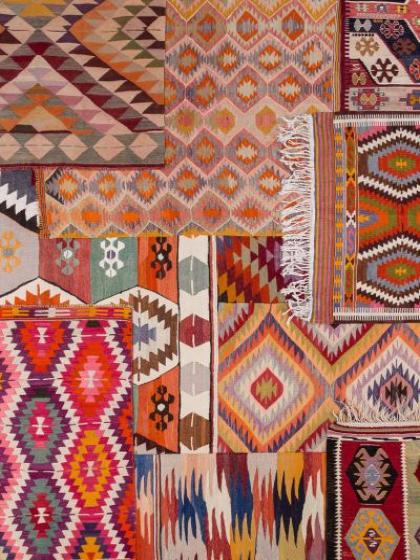
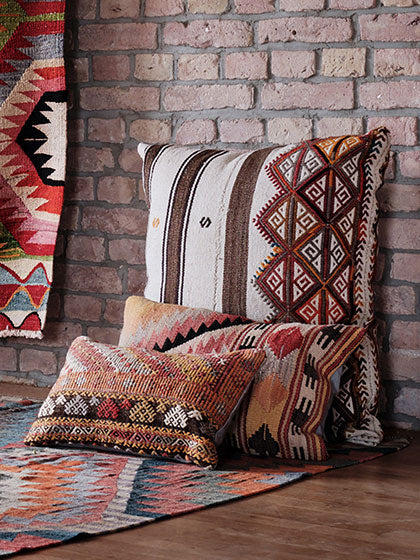


The fascinating world of Anatolian kilims, woven in the diverse regions of Turkey, is not only an expression of artistic creativity but also a deep reflection of the cultural identity and spiritual beliefs of the people. Every pattern, shade and symbol found on these traditional kilims tells stories of love, protection, fertility and connection to nature. This textile art form, passed down through the centuries, is rich in meanings that are closely linked to the way of life and traditions of the Anatolians.
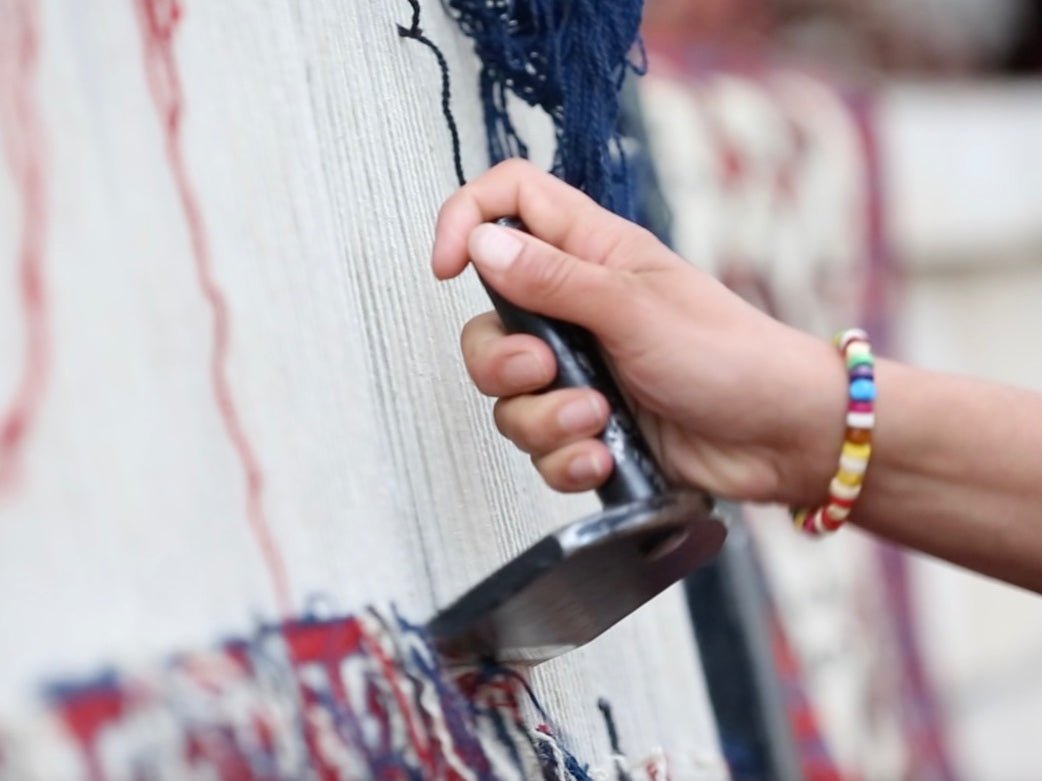
For centuries, women in Anatolia have been weaving kilims that are more than just carpets. They are personal diaries, family treasures and testimonies to a rich culture. Every symbol woven into these colorful textiles carries a message. But what do these symbols mean?
In this article, we delve into the fascinating world of kilims and decipher the meanings behind the symbols that adorn these unique works of art and continue to tell their stories in your home.
Symbols and their meanings - A look behind the patterns
Symbols that protect against evil forces and provide security:
Eye - Nazar:

The most well-known protective symbol in Anatolian kilims. It is used to ward off the "evil eye" and keep away misfortune. The eye symbolizes vigilance and protection.
Kamm - Tarak:

Originally a tool of everyday life, the comb has symbolic meanings. It protects against evil spirits and often represents fertility, as it is associated with women's domesticity.
Ram's Horn - Koçboynuzu:

A powerful symbol of strength and protection. It represents male energy and the defense against danger through physical and mental power.
Wolfsmaul - Kurt Ağızı:

This symbol stands for protection from wild animals and evil forces. It reminds us of the connection between humans and nature. The wolf is considered a strong animal that stands for courage, strength and the ability to survive.
Dragon - Ejder:

The dragon is depicted as a powerful being that is associated with strength, wisdom and protection. The dragon is considered a guardian and protector of treasures and secret places and stands for overcoming challenges and the ability to assert oneself against threats.
Scorpio - Akrep:

It serves primarily as a protective symbol, a symbol for warding off dangers. The scorpion is considered to be something evil, according to the principle of "fighting like with like," so it is supposed to protect the kilim owner from the "evil eye" and negative influences.
Signs that express emotional connection and relationships:
Hands on hips - Elibelinde:

This symbol is reminiscent of a female figure whose arms are represented by two hooks pointing inwards. It is the sign of motherhood, female power, fertility and intuition . It also symbolizes strength and cohesion within the family.
Earring - Küpe:

The earring often symbolizes the desire for love, affection and marriage and is traditionally woven into carpets by young women to express their desire for marriage or a steady partner. However, it can also be seen as a kind of blessing for the recipient of the kilim, in which the weaver wishes happiness in love for the owner of the carpet.
Hairband - Saç Bağı:

The headband often represents youth, beauty and femininity. It can also express the desire for a harmonious marriage or a strong bond between partners. Headbands have traditionally been an important part of the clothing of young women in Anatolia, especially on special occasions such as weddings or festivals, and therefore often represent the transition to adulthood
Motifs representing growth, offspring and life:
Tree of Life - Hayat Ağacı:

One of the central symbols in Anatolian kilims. The tree connects heaven, earth and the underworld and stands for life, growth and immortality. The tree of life represents the unity of all living things and the cycles of life, including birth, growth, death and rebirth
Kamm - Tarak:

In addition to its protective aspect, the comb also symbolizes fertility and the hope of offspring.
Water - Su Yolu:

The element of life. It symbolizes fertility, purity and renewal. It also represents the cycle of life. It is also used to promote prosperity, vitality and growth.
Fertility/Pomegranate – Bereket:

This symbol stands for abundance, prosperity and the desire for a large family. This motif is often represented by two connected triangles or diamonds and combined like Elibelinde with the ram's horn, which symbolizes femininity and masculinity. The pomegranate is a universal representation of fertility.
Motifs that symbolize hope and faith:
Cross - Haç:

This symbol also offers protection from the evil eye. With its structure, the cross divides the evil eye into four parts. It also stands for the connection between heaven and earth. The shape of the cross represents the four cardinal directions and the harmony between the material and spiritual realms.
Stern - Yildiz:

A symbol of hope and orientation and stands for luck, protection and the divine. The motif is often depicted in geometric or flower-like shapes.
Signs that represent prosperity and material wealth:
Chest - Sandikli:

The chest represents wealth, abundance and the storage of valuable things. It symbolizes the desire for security and the protection of possessions, especially in relation to the home and family.
Earring - Küpe:
In addition to its meaning for love, the earring also represents wealth and status, as it is often a valuable piece of jewelry.
Motifs that represent difficulties and symbolize their overcoming:
Fessel - Bukaǧı:

A symbol of the bonds and obstacles that shape life. It can symbolize both the limitation and the need to overcome such challenges.
Klebsiella - Pitrak :

The burdock represents obstacles in life and symbolizes defense and protection. The burdock, which clings to everything in nature, symbolizes clinging or holding on to good things. It shows how you can hold on and carry on despite difficulties.
Symbols that stand for freedom and hope:
Bird - Kus:

The bird represents freedom and inspiration. It is a messenger between heaven and earth and is often interpreted as a symbol of peace and hope.
The symbols as a bridge between past and future
As you can see, the symbols on Anatolian kilims are much more than decorative patterns. They are living expressions of tradition, faith and history that are still relevant today. In a globalized and rapidly changing world, these symbols remind us of the timeless values of love, protection, fertility, community and hope.
By studying the symbolism on the kilims, we recognize the deep wisdom and cultural richness contained within these handwoven textiles. The history of the weavers comes alive through these symbols, and it reminds us of the importance of honoring women's voices and their tireless work in art and craft. Each symbol on a kilim is a small piece of history that helps us connect more deeply with a forgotten past and carry that history into the future.
Why buy Anatolian kilims?
By purchasing a kilim, you are not only securing a unique piece of craftsmanship, but also a piece of cultural history. These rugs combine tradition with timeless elegance and bring warmth and personality to your home.
Visit our shop and discover the variety of Anatolian kilims – each piece is unique, each pattern a story.